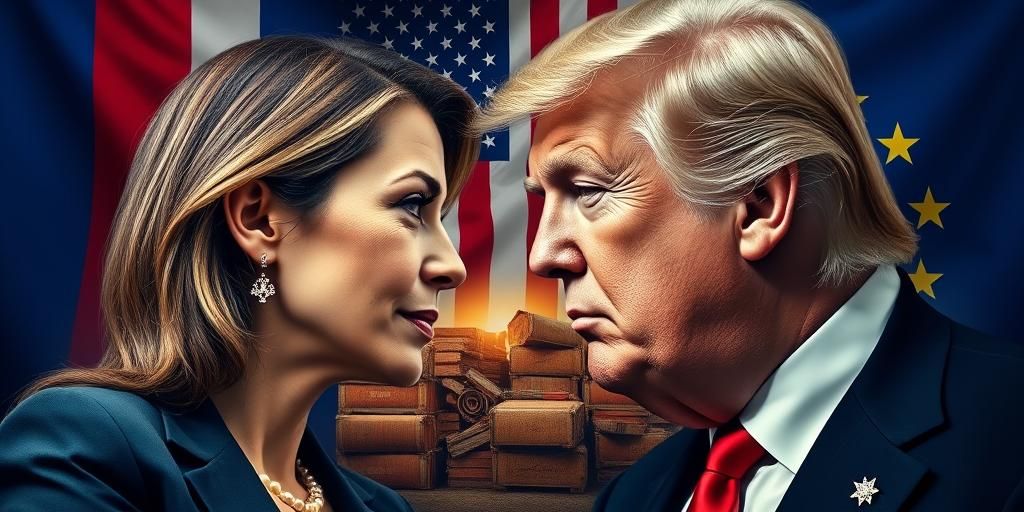
Italian Prime Minister Giorgia Meloni has issued a firm warning against escalating trade tensions within Western nations, following US President Donald Trump’s recent announcement imposing 30% tariffs on products imported from the European Union and Mexico. The tariffs are set to take effect on August 1, marking a sharp escalation in transatlantic trade disputes.
Speaking on Sunday, Meloni emphasized the risks of deepening economic divisions between allies. “A trade war within the West would weaken us all in the face of the global challenges we are confronting together,” she stated, underscoring the importance of unity among Western economies. Meloni also expressed confidence in Europe’s capacity to negotiate an equitable and pragmatic trade agreement. “Europe has the economic and financial strength to assert its position and reach a fair and sensible agreement,” she said.
Seeking Stability Amid Rising Trade Tensions
Meloni’s comments come as the European Union carefully navigates the implications of the US imposing steep tariffs on key sectors, including steel and aluminum imports, which have sparked concerns of retaliatory measures and a broader trade conflict. While some European officials advocate for a measured response, EU Commission President Ursula von der Leyen has indicated a temporary hold on retaliation in hopes of negotiating a resolution that averts a more comprehensive 30% tariff on all EU exports to the US.
The tariffs have triggered political fallout within Italy as well. Opposition parties criticized Meloni’s administration, with leaders like Giuseppe Conte of the Five Star Movement accusing the government of yielding too easily to US pressure. The dispute highlights underlying strains not only in US-EU trade relations but also within domestic political circles over how best to protect national and regional economic interests.
President Trump’s tariff announcement marks a continuation of his administration’s aggressive use of trade policy to leverage better terms for the US, amid ongoing tensions with multiple trading partners including China and Canada. For Europe, the challenge remains to balance firm economic defense with preserving transatlantic cooperation crucial for broader geopolitical stability.
As Western governments weigh their next moves, the prospect of escalating tariffs threatens to complicate efforts to address shared global issues, from economic recovery to geopolitical security. The coming weeks will be critical in determining whether diplomatic negotiation can prevent a costly trade confrontation between allied nations.
Will these tariff disputes reshape alliances and strategies within the global trade system? The answers could have lasting implications for the Western bloc’s unity and economic influence worldwide.
Leave a Reply