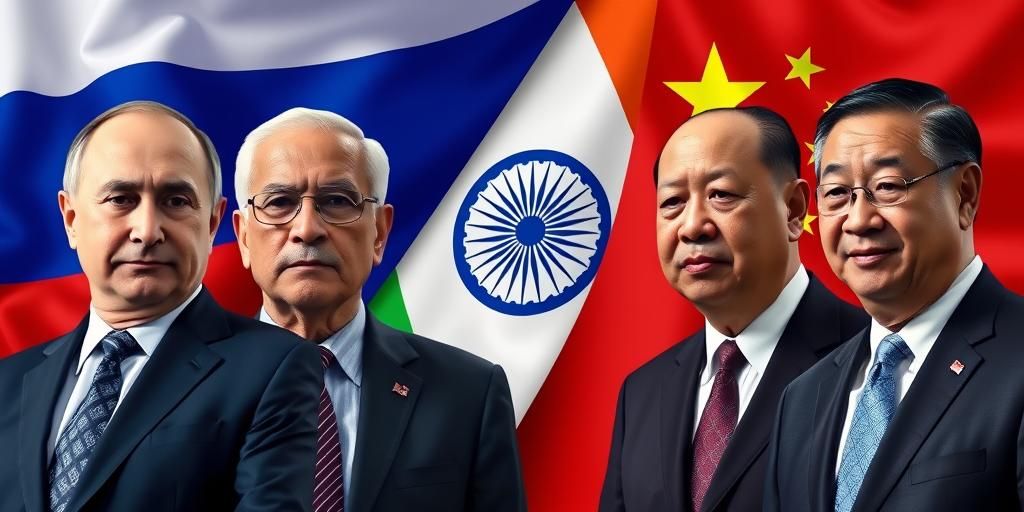
Discussions about reviving the trilateral partnership between Russia, India, and China (RIC) have gained attention recently, but sources reveal that no official meeting has yet been scheduled or agreed upon. The RIC format, envisioned as a platform for Eurasian powers to collaborate on regional and global matters, has historically served as a counterbalance to Western dominance in international affairs.
India’s Ministry of External Affairs (MEA) has maintained a cautious stance regarding the RIC revival. During the latest weekly briefing, spokesperson Randhir Jaiswal emphasized that while the mechanism is designed for dialogue among the three nations on key geopolitical issues, no date for a new meeting has been finalized. “When this meeting happens, we will work out a mutually convenient date and let you know,” he stated, underscoring India’s current non-committal position.
Russia and China Push for RIC’s Return
The renewed interest in RIC comes in the wake of recent statements from Russian officials. Foreign Minister Sergey Lavrov expressed a strong desire to resume the trilateral talks, citing the initiative’s origins with former Russian Prime Minister Yevgeny Primakov and its track record of over 20 ministerial-level gatherings. Lavrov highlighted that the cooperation extends beyond foreign policy to economic, trade, and financial discussions between the three countries.
China has voiced support for Russia’s initiative as well, framing the RIC partnership as vital not only to the three countries’ interests but also to regional and global security. This trilateral cooperation is seen as complementary to existing multilateral forums, aiming to foster stability in a period marked by shifting alliances and geopolitical tensions.
Russian Deputy Foreign Minister Andrei Rudenko recently told the Russian news agency Izvestia that Moscow is actively negotiating with both Beijing and New Delhi to bring RIC back to life. He emphasized the importance of this format, not only because the three countries are significant partners but also as founders of BRICS, an influential economic bloc. “The absence of this format appears inappropriate,” Rudenko noted, while acknowledging that resumption depends on improving bilateral relations, particularly between China and India.
The RIC mechanism stalled primarily due to disruptions caused by the COVID-19 pandemic and worsened by the 2020 military standoff between Indian and Chinese forces in Eastern Ladakh. These tensions have added complexity to India’s engagement, given its simultaneous membership in the Quad alliance — a strategic partnership with the United States, Japan, and Australia, often viewed by Beijing as a counterweight to China’s rise.
As Moscow and Beijing seek closer Eurasian cooperation through RIC, New Delhi appears cautious, balancing its competing interests in both Eastern and Western multilateral engagements. The revival of RIC could signal a notable shift in regional diplomacy, yet at present, India’s reservation signals that the trilateral grouping remains in a tentative phase.
What the future holds for this Eurasian trio remains uncertain, but their interactions will undoubtedly influence broader geopolitical dynamics across Asia and beyond.
Leave a Reply