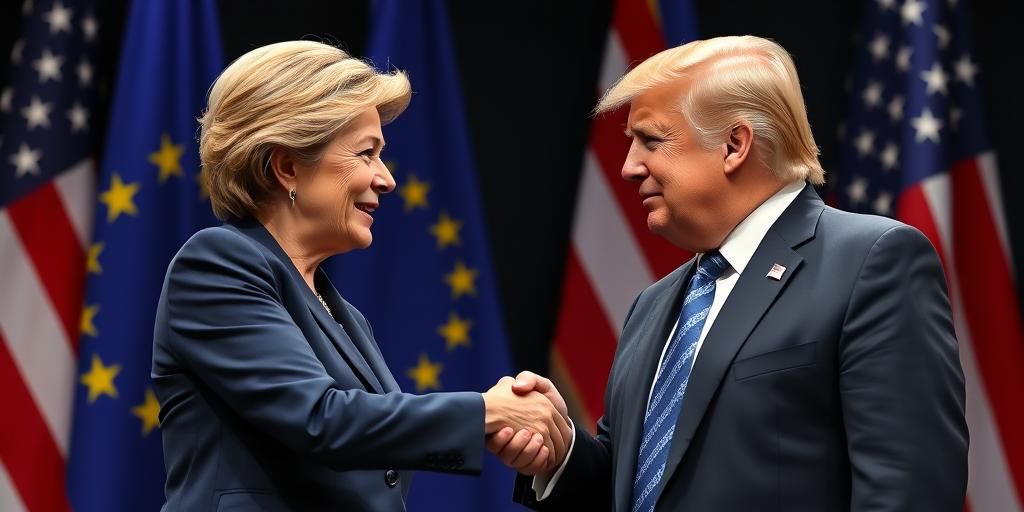
Leaders from Europe’s two economic powerhouses, France and Germany, have expressed reservations following the recent trade agreement reached between EU Commission President Ursula von der Leyen and former US President Donald Trump. The deal, aimed at easing escalating trade tensions, has sparked mixed feelings across the European Union.
German Chancellor Friedrich Merz warned that the agreement could “substantially damage” Germany’s economy. Similarly, French Prime Minister François Bayrou described the outcome as tantamount to “submission,” reflecting the concerns in Paris about the concessions made. Despite these sharp critiques, other EU member states have taken a more pragmatic approach, recognizing the deal’s potential to prevent a more damaging trade war.
Balancing Trade and Diplomacy in a Divided EU
The deal sets a 15% tariff on many EU exports to the US, a reduction from Trump’s initially threatened 30%. In exchange, Europe has agreed to increase purchases of American energy and reduce tariffs on selected US imports. The agreement was finalized during private discussions at Trump’s Turnberry golf resort in Scotland. Von der Leyen hailed it as a “huge deal,” while Trump expressed optimism that it would bring the two economic blocs closer together.
However, the pact still requires unanimous approval from all 27 EU member countries, each with its own economic ties and dependencies on US trade. While no country has signaled outright rejection, the overall mood among European leaders has been subdued. Merz highlighted that both the US and EU economies could suffer as a result, though he acknowledged Brussels’ limited leverage against a US president determined to reshape global trade relationships.
Bayrou’s stark criticism on social media underscored the political sensitivity of the deal within Europe. Meanwhile, Hungary’s Prime Minister Viktor Orbán, a known Trump ally, praised the US president’s negotiating skills. Spain’s Prime Minister Pedro Sánchez expressed cautious support but admitted it was “without any enthusiasm.”
Some European officials expressed relief that a deal was reached. Finland’s Prime Minister noted that the agreement provides “much-needed predictability,” while Ireland’s Trade Minister Simon Harris emphasized the benefits for jobs, growth, and investment. EU Trade Commissioner Maroš Šefčovič defended the agreement, stressing that given the geopolitical backdrop of the Ukraine conflict, maintaining a strong transatlantic alliance comes with complex trade-offs.
In the lead-up to negotiations, there was growing momentum within the EU to adopt “anti-coercion” measures, potentially restricting access of US companies to European markets in retaliation to American tariffs. However, faced with the prospect of 30% tariffs, European negotiators opted for a compromise to mitigate economic damage.
Despite von der Leyen’s initial upbeat framing of the deal, by the following day even Manfred Weber, leader of the European People’s Party, described it as mere “damage control.” The deal’s finer points remain subject to ongoing technical discussions before full ratification.
Across the Atlantic, the reaction from American business groups was similarly lukewarm. The National Foreign Trade Council welcomed the avoidance of a full-blown trade war but cautioned that the 15% tariffs might cause longer-term damage to US-EU relations and trust. They noted that previous tariff-free arrangements had fostered growth in key sectors like aerospace and pharmaceuticals on both sides of the Atlantic. Furthermore, the new framework leaves unaddressed contentious EU policies involving digital regulation and pharmaceutical pricing.
This agreement highlights the complexities of transatlantic trade negotiations, demonstrating that even with a deal in place, balancing national interests and broader alliances remains a delicate endeavor.
As the EU moves toward internal approval and further technical clarifications, the global community watches closely. How this trade deal will shape US-EU economic ties and geopolitical cooperation in the future is a question that remains open.
Leave a Reply