Author: admin

  • Model Context Protocol: Unifying AI Agents Like HTTP for the Web

    Auto-uploaded image

    The artificial intelligence landscape is evolving rapidly, moving towards a future where AI agents and assistants are not just smart, but also seamlessly integrated. A new open standard, the Model Context Protocol (MCP), is emerging as a critical component to achieve this, aiming to provide the universal interoperability layer for AI that HTTP delivered for the World Wide Web.

    Before MCP, AI developers frequently grappled with disparate APIs and custom connectors to integrate various tools and data sources. From 2018 to 2023, building complex AI workflows meant navigating a maze of unique schemas and brittle workarounds for every function call or tool integration. Managing secrets and moving contextual data (like files or database entries) often required bespoke solutions, consuming significant development time. This fragmentation mirrors the early internet before protocols like HTTP and URIs standardized how web pages and resources communicated, highlighting a pressing need for a common language in the AI domain.

    Unlocking AI Interoperability: How MCP Works

    MCP standardizes how AI hosts (agents or applications), clients (connectors), and servers (capability providers) interact. It acts as a universal bus for AI capabilities and context, leveraging JSON-RPC messaging over flexible transports like HTTP or stdio. This design ensures a clear interface for secure and negotiable interactions.

    Key functionalities provided by MCP include:

    • Tools: Servers can expose typed functions with JSON Schema descriptions, allowing any MCP client to discover and invoke them.
    • Resources: Addressable contextual elements such as files, tables, documents, or URIs can be reliably listed, read, updated, or subscribed to by agents.
    • Prompts: Reusable prompt templates and workflows become discoverable and dynamically triggerable, streamlining agent interactions.
    • Sampling: Agents can delegate large language model (LLM) calls or complex requests to host applications when a server requires model interaction.
    • Transports: MCP supports local stdio for rapid desktop or server processes, and streamable HTTP (with POST for requests and optional Server-Sent Events for server events) for scalable deployments.
    • Security: Designed with enterprise needs in mind, MCP mandates explicit user consent and OAuth-style authorization with audience-bound tokens. It prevents token passthrough, requiring clients to declare identity and servers to enforce scopes and approvals through clear user experience prompts.

    The parallel to HTTP is strong. Just as URLs made web resources routable, MCP makes AI context blocks listable and fetchable. Typed, interoperable actions offered as “Tools” in MCP replace the need for bespoke API calls, much like HTTP methods standardize web interactions. Capability negotiation, versioning, and error handling are also standardized, akin to HTTP headers and content-type negotiation.

    MCP is gaining momentum due to several factors: its cross-client adoption across platforms like Claude Desktop and JetBrains, a minimal yet extensible core design, universal deployability from local tools to enterprise-grade servers, robust security features like OAuth 2.1 and comprehensive audit trails, and a growing ecosystem of open and commercial servers integrating databases, SaaS applications, and cloud services.

    If MCP becomes the dominant protocol, the benefits are significant. Vendors could ship a single MCP server, allowing customers to plug into any compatible AI environment. Agent “skills” would become portable server-side tools, composable across various agents and hosts. Enterprises could centralize policy management for scopes, auditing, and data loss prevention. Furthermore, onboarding would accelerate, and AI agents would access context resources directly, eliminating reliance on brittle scraping or copy-paste workarounds.

    Despite its promise, MCP faces typical challenges for an emerging standard. It is not yet a formal IETF or ISO standard, necessitating strong, neutral governance. Ensuring the security of a vast supply chain of MCP servers, preventing “capability creep” beyond its minimal core, standardizing inter-server composition patterns, and developing robust observability and Service Level Agreements (SLAs) are all critical for widespread enterprise adoption. The migration path for existing systems requires a methodical approach, starting with inventorying use cases, defining clear schemas, and implementing strong guardrails like allow-lists, dry-run features, and consent prompts.

    The Model Context Protocol represents a crucial step towards a more integrated, secure, and efficient AI ecosystem. Its potential to become the “HTTP for AI” hinges on continued industry collaboration, robust operational patterns, and a commitment to its open, minimal core. How this shapes the future of responsible and scalable AI deployments remains to be seen.

  • MCP: Standardizing AI Interoperability for Agents

    Auto-uploaded image

    The artificial intelligence landscape is rapidly evolving, with a growing demand for seamless interaction between AI agents, assistants, and the vast array of tools and data sources they need to operate. Just as HTTP revolutionized the internet by providing a universal communication protocol, the Model Context Protocol (MCP) emerges as a critical open standard poised to bring similar standardization to AI interoperability.

    For years, AI developers and enterprises grappled with a fragmented ecosystem. Between 2018 and 2023, integrating AI systems often meant custom APIs, bespoke connectors, and significant time spent building one-off solutions for every function call or tool. Each AI assistant required unique schemas and complex handling of data and secrets, creating brittle, inefficient workflows. This “pre-protocol” era mirrored the early days of the web before uniform resource locators (URIs) and HTTP established a common language, enabling broad connectivity. MCP aims to solve this by offering a minimal, composable contract, allowing any capable AI client to connect with any server without custom workarounds.

    How the Model Context Protocol (MCP) Works

    MCP acts as a universal communication bus, connecting AI hosts (agents or applications), clients (connectors), and capability providers (servers) through a clear, standardized interface. It primarily uses JSON-RPC messaging over HTTP or stdio transports, alongside well-defined contracts for security and negotiation. Key features standardized by MCP include:

    • Tools: Servers expose typed functions, described via JSON Schema, which clients can list, validate, and invoke.
    • Resources: Addressable context, such as files, databases, or documents, can be reliably listed, read, subscribed to, or updated by AI agents. This standardizes how AI accesses information.
    • Prompts: Reusable prompt templates and workflows can be discovered, filled, and dynamically triggered, ensuring consistent interactions.
    • Sampling: Agents can delegate large language model (LLM) calls or requests back to hosts when a server requires model interaction, providing flexibility.
    • Transports: MCP supports local stdio for quick processes and streamable HTTP (with POST for requests and optional SSE for server events) for scalable deployments.
    • Security: Designed with explicit user consent and OAuth-style authorization, using audience-bound tokens. Clients declare their identity, and servers enforce scopes and approvals with clear user experience prompts, ensuring robust enterprise-grade security. This addresses growing concerns around AI governance and data privacy.

    The analogy to HTTP is apt: AI context blocks become routable like URLs, typed interoperable actions replace custom API calls akin to HTTP methods, and capability negotiation and error handling are standardized, much like HTTP headers and content types.

    What makes MCP a strong contender for becoming the foundational AI protocol is its pragmatic approach. It’s gaining cross-client adoption from major platforms like Claude Desktop and JetBrains, indicating broad industry support. Its core design is minimal, allowing for servers ranging from simple tool integrations to complex multi-agent orchestrations. It runs across various environments, from local setups to secure enterprise cloud deployments, leveraging OAuth 2.1 for robust logging and audit trails—a critical feature for regulated industries and large organizations.

    If MCP becomes the dominant protocol, the benefits are significant: vendors could ship a single MCP server compatible with any supporting AI client, making “skills” portable across different agents and hosts. Enterprises would achieve centralized policy management for scopes, audits, and data loss prevention. Furthermore, connecting new AI capabilities could become as simple as clicking a deep link, streamlining the integration process and replacing current workarounds like copy-pasting data with first-class context resources.

    While MCP demonstrates strong momentum, its path to full dominance involves addressing several challenges. These include formalizing its governance and becoming an official standard (e.g., IETF or ISO), ensuring security across a vast supply chain of servers, preventing capability creep by maintaining a minimal core, and developing robust patterns for inter-server composition and comprehensive observability.

    MCP represents a pivotal step toward a more unified, secure, and efficient AI ecosystem. Its success will ultimately depend on continued neutral governance, broad industry adoption, and the development of robust operational patterns. How this foundational protocol shapes the future of responsible AI development and deployment remains a key area of observation.

  • UK Signals Closer EU Ties with Youth Mobility and Trade Push

    Auto-uploaded image

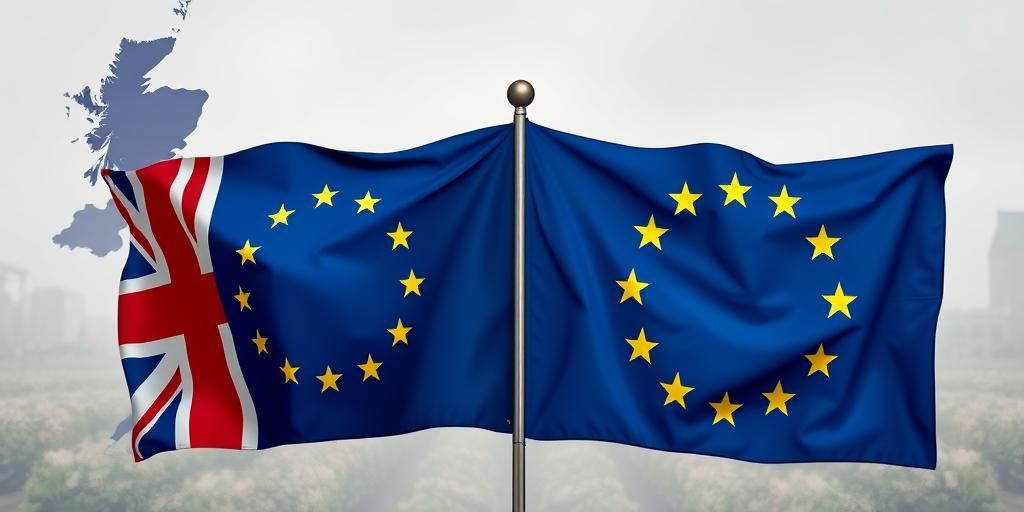
    In a significant shift towards re-engaging with the European Union, the Labour Party’s lead negotiator on European affairs, Nick Thomas-Symonds, has expressed strong enthusiasm for a potential EU youth mobility scheme. This public endorsement signals a broader government intention to cultivate closer ties with the bloc, moving beyond the cautious approach of recent years.

    Mr. Thomas-Symonds, who serves as the Cabinet Office minister overseeing UK-EU relations, articulated his eagerness for a deal that would facilitate easier travel and work opportunities for young Britons across Europe. This marks a notable change in rhetoric, as just a few months prior, the government remained hesitant to even consider negotiations on such a scheme, often out of concern for re-igniting debates surrounding free movement post-Brexit.

    Forging Dual Paths: Youth Mobility and Agricultural Trade

    Beyond youth mobility, Mr. Thomas-Symonds also committed to securing a new agricultural export agreement with the EU by early 2027. This ambitious timeline allows the government approximately 18 months for negotiations. During these talks, British officials are expected to advocate for specific exemptions from EU regulations, such as those pertaining to genetically modified crops. Conversely, European nations, particularly France, may push for the UK to reconsider its pre-election commitment to ban foie gras imports.

    A key aspect of the UK’s proposed approach involves “dynamic alignment” with EU regulations. Mr. Thomas-Symonds explained that this principle means British rules would evolve in tandem with European standards. Historically, “dynamic alignment” was a contentious point for many Brexit supporters, who viewed it as surrendering regulatory autonomy to Brussels. However, Mr. Thomas-Symonds framed this alignment as a strategic choice, emphasizing its benefits for national economic interests and business efficiency across the country by adhering to common high standards.

    This evolving stance reflects a growing confidence within Labour circles regarding their ability to navigate and win public support for a more engaged European relationship. This comes even as they grapple with how to counter figures like Nigel Farage, whose strong anti-immigration messages continue to resonate with a segment of the electorate. Mr. Thomas-Symonds directly criticized Mr. Farage for his perceived unwillingness to foster any relationship with the EU, suggesting it stems from a desire for Britain’s failure. However, when pressed on Mr. Farage’s controversial language regarding asylum seekers, the minister distanced himself, stating, “We all use our own language. I wouldn’t use Nigel Farage’s language.”

    The renewed impetus behind these negotiations underscores a pragmatic shift in the UK’s post-Brexit foreign policy, prioritizing economic and social benefits through closer European cooperation. What these evolving relationships mean for the future of UK-EU integration remains a critical question.

  • US Imposes Sanctions on ICC Judges Investigating Netanyahu and Afghan War Crimes

    Auto-uploaded image

    The United States has recently announced sanctions targeting judges and officials of the International Criminal Court (ICC) involved in investigations concerning Israeli Prime Minister Benjamin Netanyahu and alleged war crimes in Afghanistan. This move deepens the ongoing tensions between Washington and the ICC, highlighting the complex intersection of international justice and geopolitical interests.

    Specifically, the US Treasury Department imposed financial restrictions on ICC Prosecutor Karim Khan and three judges, accusing them of undermining American sovereignty. These sanctions block any US-based assets and prohibit Americans from engaging in transactions with the designated individuals.

    Background: ICC Probes and US-OIC Relations

    The ICC has been investigating alleged war crimes committed in the Palestinian territories, including actions linked to Israeli officials such as Netanyahu. Meanwhile, another inquiry focuses on abuses during the US-led war in Afghanistan. The US government, which is not a party to the ICC, has repeatedly voiced strong opposition to these probes, labeling them as politically motivated.

    Washington’s stance stems partly from concerns that ICC investigations could target US military personnel or allies without proper oversight from national courts. Historically, the US has employed various means to shield its citizens from ICC jurisdiction, including legislation like the American Service-Members’ Protection Act.

    The sanction announcement follows previous US actions that sought to limit ICC operations by withholding funding and pressuring other countries to reject the court’s authority.

    Karim Khan, the ICC Prosecutor, has emphasized the court’s independence and the importance of holding all parties accountable for violations of international humanitarian law, regardless of political pressures.

    While the sanctions may complicate the ICC’s work, they also underline the ongoing friction between mechanisms of global justice and the world’s major powers. As the ICC continues its investigations, the international community watches closely how these legal and political dynamics will evolve.

    What consequences these measures could have for international accountability remains an open question.

  • US Senator JD Vance Criticizes Ukraine War Funding Ahead of Alaska Summit

    Auto-uploaded image

    As global attention focuses on the upcoming Alaska summit, US Senator JD Vance has publicly voiced strong opposition to ongoing American financial support for the conflict in Ukraine. Vance’s remarks underscore a growing debate within US politics about the country’s role in funding the war effort against Russia.

    Vance, a prominent Republican figure, stated bluntly that the United States is “done with funding the Ukraine war business.” His comments reflect a broader skepticism among some US lawmakers regarding continued aid, questioning the sustainability and strategic benefits of US involvement amid an increasingly complex geopolitical landscape.

    Shifting US Perspectives on Ukraine Aid

    The conflict between Russia and Ukraine, ongoing since 2014 and significantly intensifying after Russia’s full-scale invasion in early 2022, has drawn substantial international attention and support for Ukraine. The Biden administration, along with Congress, has committed billions in military, economic, and humanitarian assistance to Kyiv, aiming to bolster Ukraine’s defenses and stabilize the region.

    However, this aid has become a contentious issue domestically. Critics like Senator Vance argue that the financial burden on the US taxpayer is mounting without clear progress or exit strategies. These voices often emphasize the need to reassess American priorities, especially as inflationary pressures and domestic challenges continue to impact the US economy.

    On the other hand, many policymakers and analysts maintain that supporting Ukraine remains critical to countering Russian aggression and upholding international norms, warning that disengagement could embolden adversaries and lead to wider instability in Europe.

    The upcoming summit in Alaska, intended to bring together US and Russian officials amid strained relations, adds another layer of complexity. With dialogue between Washington and Moscow fraught and US legislators divided over support policies, discussions at the summit may influence future approaches to the conflict and diplomatic engagement.

    Senator Vance’s candid stance highlights the ongoing debate within Washington, emphasizing how the US’s role on the global stage continues to evolve in response to geopolitical challenges and domestic pressures.

    As global observers watch the summit and US policy shifts closely, the question remains: How will America’s position on Ukraine shape the broader diplomatic landscape and international security moving forward?

  • US Doubles Tariffs on India Amid Russia Oil Dispute

    Auto-uploaded image

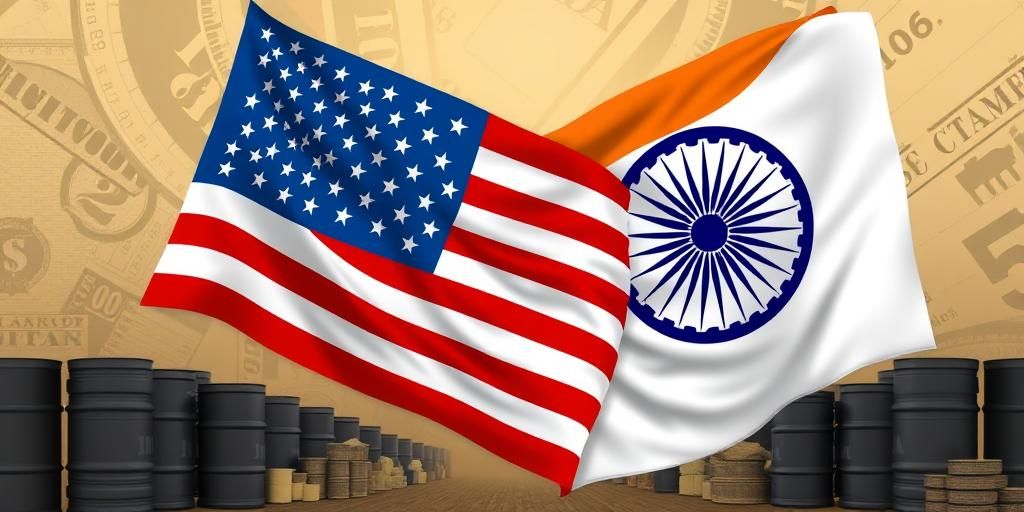
    Prime Minister Narendra Modi convened an urgent high-level cabinet meeting on Friday afternoon to evaluate the fallout from the recent sharp tariff increase imposed by the United States on Indian exports. This measure, announced by US President Donald Trump, raises tariffs on Indian goods to a punitive 50%, targeting India’s ongoing trade with Russia. The announcement abruptly halted a period of generally improving relations between New Delhi and Washington.

    Trump made it clear that no further trade negotiations with India would occur until the dispute over tariffs is resolved. When asked about potential talks, the US President responded simply, “No, not until we get it resolved,” leaving uncertainty over whether this refers to the resolution of the Ukraine conflict or other trade issues underlying the earlier 25% duties imposed.

    Escalating Trade Tensions Linked to Russian Oil

    The expanded tariffs are part of Trump’s broader strategy to pressure Moscow economically, as India is the world’s second-largest buyer of Russian oil. This latest 25% surcharge, added to the existing 25% reciprocal duty, effectively doubles the tariff rate on Indian exports to the US, its largest export destination. These new tariffs will come into force on August 27, signaling a tougher US stance amid ongoing geopolitical tensions over the Ukraine war.

    Earlier, Trump set a 50-day ultimatum for Russia to agree to a ceasefire or face additional US sanctions, which he later shortened to 12 days. Although the deadline passed recently, the US proceeded with punitive tariffs on India and other Russian oil customers, highlighting the growing complexity of global trade relations influenced by geopolitical conflicts.

    Moody’s Ratings recently reported that India’s robust domestic demand and the strength of its services sector will help absorb some of the economic strain caused by these tariffs. However, they warned that continued Russian oil imports under sanctions could reduce India’s real GDP growth by roughly 0.3 percentage points from the projected 6.3% for fiscal year 2025-26.

    The tariffs are significantly higher than those faced by many Asia-Pacific countries, posing a serious challenge to India’s global trade competitiveness. The move has also prompted major US retailers like Amazon, Walmart, and Target to pause new orders from India, particularly in sectors such as textiles and apparel, raising concerns about immediate impacts on Indian exporters.

    On the Indian stock market, tariff jitters contributed to early declines in benchmark indices. Investors reacted nervously as foreign institutional investors pulled out capital while domestic buyers stepped in to cushion the sell-off.

    Internationally, the new tariffs have drawn criticism from UN Secretary-General Antonio Guterres, who expressed that all trade wars are damaging and should be avoided. Guterres underscored his concern for the world’s poorest populations, who are likely to suffer most from increased tariffs and economic disruptions.

    Meanwhile, the Trump administration pushed ahead with broad tariff hikes on imports from over 60 countries, reaching levels not seen in the US since the 1930s. These moves aim to boost domestic manufacturing and investment, though analysts warn of potential negative effects on US consumers and global economic growth.

    As India grapples with these sudden changes, its government is reportedly considering targeted support measures for groups hardest hit, including textiles and chemical exporters. These efforts are part of India’s larger export promotion strategy, seeking to mitigate the adverse effects of US tariffs.

    This evolving trade dispute highlights the intertwining of geopolitical tensions and economic policy in shaping the global trade environment. Whether there will be a diplomatic breakthrough remains uncertain as both countries brace for the impact of this tariff escalation.

    What remains clear is that these developments could reshape trade dynamics in the Indo-Pacific and beyond, with consequences that extend far outside the immediate bilateral relationship.

  • Russia Condemns US Tariffs, Leans on BRICS Amid Growing Trade Tensions

    Auto-uploaded image

    Russia has publicly denounced the recent US tariff hikes, accusing Washington of pursuing a neocolonial agenda aimed at preserving its dominance over nations in the Global South. The comments come shortly after US President Donald Trump announced significant tariff increases targeting multiple countries, including India, for importing Russian oil.

    Russia’s Response to US Tariff Policies and BRICS Cooperation

    Maria Zakharova, spokesperson for the Russian Foreign Ministry, criticized the United States for wielding economically motivated sanctions and tariffs as political tools. She described these measures as efforts to suppress countries seeking independent paths in the evolving world order. According to Zakharova, Washington’s inability to accept the gradual decline of its global hegemony drives these coercive economic actions.

    “Sanctions and restrictions have regrettably become a hallmark of today’s international landscape, impacting nations worldwide,” Zakharova stated. “The US clings to a neocolonial strategy, applying pressure on states that choose autonomy in their foreign policies.”

    Significantly, Russia emphasized its strong alliance with the BRICS coalition—originally made up of Brazil, Russia, India, China, and South Africa, now expanded to include Egypt, Ethiopia, Iran, the UAE, and soon Indonesia. Zakharova affirmed that the bloc provides vital support in countering what Russia calls “unlawful unilateral sanctions” and tariff wars aimed at undermining national sovereignty.

    The Russian official marked the rising tariff barriers as a departure from principles of free trade once championed by Western nations. She also warned that Washington’s approach risks exacerbating economic slowdown, disrupting global supply chains, and fragmenting international markets.

    On the heels of Trump’s announcement to significantly increase tariffs on Indian imports of Russian oil, New Delhi responded sharply. The Indian government reminded Washington that it had initially encouraged Indian imports from Russia following the outbreak of the Ukraine conflict. India also pushed back on criticism from the EU targeting Indian refiners, asserting that their purchases stem from global market necessities, unlike other nations whose trade with Russia is less essential.

    This escalating trade dispute highlights the growing divergence between US policy and the strategic interests of emerging economies, many of which are reinforcing ties within multilateral frameworks like BRICS to forge a multipolar global order.

    As this dynamic unfolds, the long-term impact on international trade relations and global power structures remains to be seen. The resilience of alliances such as BRICS may well redefine economic cooperation and geopolitical alignments in the years ahead.

  • Lessons from Clement Attlee for Keir Starmer’s Leadership

    Auto-uploaded image

    Reflecting on Leadership: Attlee’s Legacy and Starmer’s Challenge

    Clement Attlee, Britain’s post-war Labour prime minister, is often remembered not just for his policies but for his integrity. As Keir Starmer navigates his leadership amid complex international and domestic challenges, parallels are drawn between these two figures from different eras.

    Attlee’s premiership was marked by momentous decisions, including overseeing India’s transition to independence, which Martin Kettle’s recent article touched upon. Contrary to the assumption that Attlee hastily withdrew Britain from India, historical records show he had a deep engagement with the subcontinent’s political landscape long before becoming prime minister. As a member of the Simon Commission in 1927, Attlee visited India multiple times, understood the complex factions, and recognized the difficulties independence would bring—including the upheaval of partition. While he could not predict the ensuing violence, Attlee’s government committed itself earnestly to honoring Britain’s promises for Indian self-rule.

    Keir Starmer faces comparable diplomatic challenges today, particularly concerning the Israeli-Palestinian conflict. Observers suggest that like Attlee, Starmer may rise to the occasion, balancing Labour’s historical principles with the evolving geopolitical realities.

    Another historical episode often cited in discussions about Labour leadership is the 1956 Suez Crisis, a pivotal moment reflecting Britain’s diminished global power and its complex relationship with the United States. Ernest Bevin—a towering figure in Labour history who served as minister of labour during World War II and as foreign secretary afterward—sought continued US military presence in Europe but was skeptical of the so-called “special relationship.” The Suez Crisis laid bare the limits of American support for Britain’s imperial interests, as the US prioritized its own strategic goals over those of its allies.

    This crisis galvanized European cooperation, notably in France, which emerged determined to pursue an independent foreign policy and military capability beyond transatlantic influence. The crisis accelerated moves toward a common European market and an advanced French defense program, including nuclear weapons development. Had Attlee been prime minister instead of Anthony Eden during Suez, many historians argue, Britain might have avoided the collusion with France and Israel that remains a controversial chapter. Above all, Attlee’s hallmark was a principled integrity missing in Eden’s handling of the crisis.

    While reflections on Labour’s past illuminate its leaders’ qualities and mistakes, they also underscore a continuous thread of navigating Britain’s place on the world stage amid shifting power balances. Starmer’s invocation of Harold Wilson and David Lammy’s admiration for Ernest Bevin indicate a search for historical guidance rather than straightforward replication.

    Lighthearted anecdotes from the era add a human dimension to these figures: for instance, Attlee’s wife, reportedly a poor driver, once accidentally collided with another motorist while chauffeuring the prime minister on a foggy night in London—fortunately, with no injuries.

    Labour’s current leadership faces the task of balancing historical legacy with forward-looking policies, particularly as global events challenge Britain’s diplomatic and political strategies. Whether Keir Starmer can embody the integrity and thoughtful leadership of Attlee remains an open question, inviting close attention from observers worldwide.

    What this means for the future direction of Labour and Britain’s role in global affairs is a compelling question as history and present challenges converge.

  • India’s Rising Reliance on Russian Oil Amid Global Sanctions

    Auto-uploaded image

    India’s energy landscape has shifted dramatically in recent years, with Russian crude oil emerging as the nation’s primary import source. Once negligible, making up just 0.2% before the Russia-Ukraine conflict, Russian oil now accounts for roughly 40% of India’s crude intake—a staggering transformation shaped by geopolitical tensions and global sanctions.

    From Cold War Ties to Modern Energy Dependencies

    India’s longstanding relationship with Russia, rooted in Cold War-era diplomacy, plays a significant role in this development. While India championed a policy of non-alignment during the Cold War, it maintained close ties with the Soviet Union, especially through military cooperation and technology exchanges. Despite the Soviet Union’s collapse, Russia remains India’s top arms supplier, underpinning a strategic partnership that extends well beyond defense.

    This historical alignment has influenced India’s recent energy choices. After Russia’s invasion of Ukraine in February 2022, many Western countries imposed sanctions, including oil import bans aimed at crippling Moscow’s economy. However, as traditional Russian customers curtailed their purchases, Russia turned to alternative buyers, including India and China, offering steep discounts.

    According to data from Kpler, India’s crude oil imports from Russia reached a peak of 2.15 million barrels per day (bpd) in May 2023. By July 2024, Russian crude still constituted about 41% of India’s total oil imports, overtaking suppliers like Iraq (20%) and Saudi Arabia (11%). Currently, India imports around 1.75 to 1.78 million bpd of Russian oil, compared to approximately 900,000 bpd from Iraq and 700,000 bpd from Saudi Arabia.

    One of the driving forces behind this surge is economic. With sanctions restricting Russia’s access to Western markets, Russia discounted its crude oil by as much as $40 below Brent benchmark prices at peak. Reuters data shows that between January and September 2023, India paid around $525.60 per metric ton for Russian crude, roughly $5 less per barrel than Iraqi oil. The Indian energy sector reportedly saved about $13 billion on oil imports over two fiscal years, according to ICRA, reflecting the financial incentives tied to these purchases.

    However, India’s growing reliance on Russian oil has drawn international scrutiny. Former US President Donald Trump publicly criticized India’s approach, threatening a 25% tariff on Indian goods, coupled with “penalties” for India’s continued intake of Russian energy. Trump called India “Russia’s largest buyer of energy along with China” and suggested sanctions against all Russian oil buyers unless Moscow made a peace concession in Ukraine within 50 days.

    India’s domestic energy demand underpins these complex decisions. The country consumes approximately 5.2 million barrels of oil daily, importing nearly 85% of this supply. Despite efforts such as the discovery of Bombay High in the 1970s, indigenous production remains insufficient to meet rising demand.

    Throughout the Ukraine conflict, New Delhi has maintained a position of neutrality. Petroleum and Natural Gas Minister Hardeep Singh Puri has argued that Indian purchases helped stabilize global oil prices, preventing a dramatic spike. “Had India not bought Russian oil,” he noted in April 2024, “prices would have gone through the roof.”

    Reflecting this trend, India’s crude oil import bill from Russia escalated from under $2.5 billion in the 2021-22 financial year to over $31 billion in 2022-23. The figure surged further to more than $140 billion in 2023-24, underscoring the scale of India’s pivot toward Russia amid a shifting global energy landscape.

    As global powers navigate sanctions, diplomacy, and energy security, India’s evolving ties with Russian oil raise important questions about balancing geopolitical pressures and domestic needs. The long-term impact of this realignment on regional and international stability remains a subject to watch closely.