Author: admin

  • China Slams US on Trade Hypocrisy Over Russia and Beijing

    Auto-uploaded image

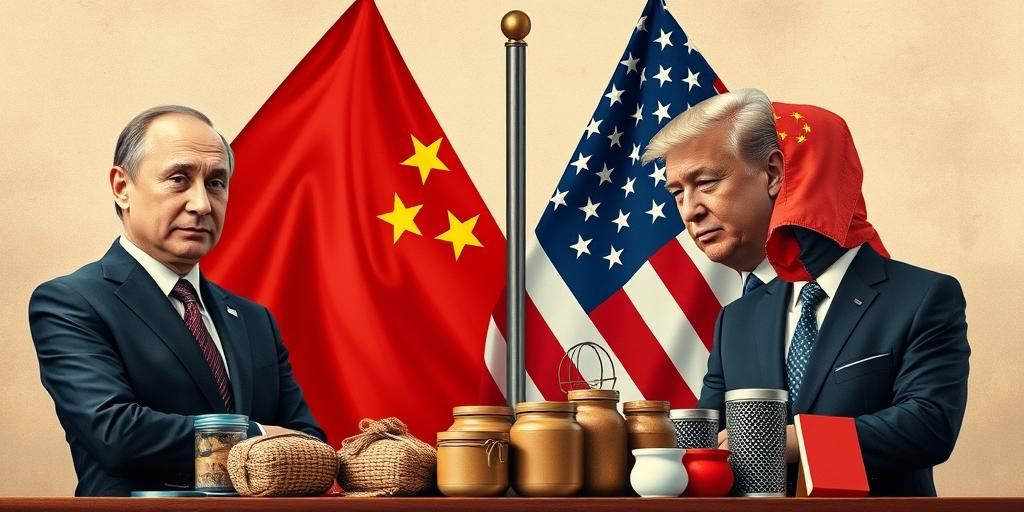
    China has sharply criticized the United States, accusing Washington of double standards regarding trade relations with Russia and China. The Chinese government questions why the US maintains sanctions on Beijing’s economic activities while continuing trade ties with Russia amid the Ukraine conflict.

    Chinese officials emphasize their frustration over what they see as Washington’s inconsistent approach. While the US has imposed sweeping restrictions on Chinese companies citing national security concerns, it has simultaneously allowed considerable trade with Russia, despite Western efforts to isolate Moscow over its invasion of Ukraine.

    This dispute highlights the growing tensions in US-China relations, which have been fraught with disputes over technology, human rights, and geopolitical influence for several years. China’s position reflects its broader opposition to what it considers unfair and politicized economic measures by the West.

    The US has justified its sanctions against Chinese firms by alleging involvement in activities contrary to US interests, often linked to military or surveillance technologies. Conversely, the US maintains sanctions and export controls targeting Russia’s economy but still permits certain trade activities, especially in energy and raw materials.

    China’s criticism comes at a time of complex global alignments, where Beijing continues to deepen ties with Moscow, partly to counterbalance US influence. The US and its allies remain cautious about any coordination between China and Russia that could challenge Western-led economic and diplomatic norms.

    Trade, Sanctions, and Geopolitical Tensions

    This latest exchange underscores the challenges in maintaining a unified international stance on trade and sanctions amidst shifting alliances. The US approach to China focuses heavily on restricting technology transfers and pressuring Beijing over human rights issues and perceived unfair trade practices. Meanwhile, Moscow’s conflict with Ukraine complicates efforts to enforce cohesive economic responses.

    As China questions the rationale behind the US’s disparate treatment, observers note that such disputes could further strain global economic relations. Washington’s balancing act between punishing Moscow and confronting Beijing signals an increasing complexity in global diplomacy, with ramifications for international trade systems and geopolitical stability.

    What this means for international cooperation on trade sanctions and economic diplomacy remains uncertain as these major powers navigate an increasingly fractious global landscape.


  • Edtech Startup Arivihan Raises $4.17M Led by Prosus & Accel

    Auto-uploaded image

    Arivihan, an emerging player in the education technology sector, has successfully secured $4.17 million in its latest funding round. The investment was spearheaded by prominent venture capital firms Prosus and Accel, signaling strong confidence in Arivihan’s innovative approach to edtech solutions.

    The fresh capital will aid Arivihan in scaling its platform and accelerating product development to better serve learners and educators. As education continues to evolve with digital transformation, startups like Arivihan are gaining attention by leveraging technology to enhance learning experiences.

    Prosus and Accel are globally recognized investors with a solid track record of backing technology companies that disrupt traditional industries. Their involvement not only brings financial support but also strategic guidance to Arivihan’s growth plans.

    Edtech Investment Landscape and Arivihan’s Prospects

    The edtech market has been expanding rapidly, driven by increasing demand for personalized and flexible education solutions worldwide. This funding round positions Arivihan to capitalize on this growth, advancing its platform capabilities and expanding its user base.

    Recent years have seen numerous edtech startups raise significant capital to develop AI-powered tutoring, adaptive learning, and virtual classroom platforms. Arivihan’s successful funding round highlights continued investor interest in innovations that blend technology with education.

    With Prosus and Accel leading the round, Arivihan is well placed to enhance its market presence and contribute to reshaping learning through technology-driven methods. How this investment translates into tangible improvements for educators and students will be important to watch as the edtech sector matures.

  • Cambridge United Pioneers AI Agents to Manage Player Contracts

    Auto-uploaded image

    Cambridge United has taken a groundbreaking step by becoming the first football club to utilize artificial intelligence agents for managing player contracts. This innovative approach marks a significant milestone in the sports industry’s adoption of AI technologies, showcasing how machine learning-driven agents can streamline administrative tasks in professional football.

    Traditionally, contract negotiations and management have relied heavily on human agents, club officials, and legal advisors. By deploying AI agents, Cambridge United aims to enhance efficiency, reduce human error, and accelerate decision-making during player negotiations. These AI-powered systems analyze contract terms, performance metrics, and market data to offer actionable insights and recommendations tailored to each player’s profile.

    The Rise of AI Agents in Sports Management

    The use of AI agents in sports aligns with broader trends in artificial intelligence applications across industries. As AI models become more sophisticated, their roles expand from basic automation to complex decision support systems. In football, where player contracts are often multifaceted and involve numerous variables, AI provides clubs with a competitive edge by optimizing contract structures and ensuring compliance with league regulations.

    Cambridge United’s adoption follows a wave of AI integration into sports analytics, player performance tracking, and injury prevention. However, their focus on contract management represents a novel use case. By automating contract-related communications and negotiations, the club hopes to free up human resources to concentrate on strategy, scouting, and player development.

    While this is Cambridge United’s first public foray into AI-driven contract management, the technology itself builds on recent advances in natural language processing and reinforcement learning. These fields enable AI agents to understand complex documents, simulate negotiation scenarios, and adapt their strategies dynamically. The football community will be watching closely to assess how effectively AI agents handle the subtleties of contractual agreements.

    This move also raises important considerations about transparency, data privacy, and ethical AI use within sports administration. Ensuring that these AI tools operate fairly and without bias will be crucial as other clubs consider similar innovations.

    Cambridge United’s initiative exemplifies how AI continues to transform established industries by automating detailed, specialized tasks traditionally managed by humans. The success of such AI agents could revolutionize sports management, offering faster, more precise contract handling and potentially reshaping how clubs negotiate and structure player agreements.

    How this advancement will influence future AI applications in football and beyond remains an engaging story to follow.

  • Vahan.ai Expands with LemmaTree Funding and L.earn Acquisition

    Auto-uploaded image

    Vahan.ai has recently announced a significant boost in its growth trajectory by securing investment from LemmaTree, a leading venture firm focused on AI-driven innovations. Alongside this infusion of capital, Vahan.ai has acquired L.earn, a technology platform specializing in AI-powered recruitment solutions. This strategic move is set to strengthen Vahan.ai’s position in automating blue-collar hiring processes across industries.

    Founded with a mission to streamline workforce recruitment using artificial intelligence, Vahan.ai targets sectors where traditional hiring is often time-consuming and inefficient. The acquisition of L.earn enables Vahan.ai to integrate advanced candidate-matching algorithms and skill evaluation tools, making the hiring experience faster and more precise for employers and job seekers alike.

    Strengthening AI-Driven Hiring in Blue-Collar Sectors

    Vahan.ai’s recent collaboration with LemmaTree marks a continual trend where venture capital is fueling AI startups focused on real-world labor market challenges. LemmaTree’s investment aims to support Vahan.ai’s technology enhancement, market expansion, and infrastructure development. This will facilitate broader adoption of AI systems that can process large volumes of job postings and candidate data with greater accuracy.

    Historically, recruitment in sectors such as manufacturing, logistics, and construction has relied heavily on manual processes, often resulting in delays and mismatches. The integration of L.earn’s AI capabilities allows for refined skill assessments and automated screening, reducing recruitment turnaround times and improving job fit. This also aligns with the global push towards digitizing workforce management and scaling AI applications in HR technology.

    With LemmaTree’s backing and L.earn’s technology, Vahan.ai is positioned to expand its footprint in the competitive AI-driven recruitment market, delivering efficient blue-collar hiring solutions to companies that rely on rapid and reliable workforce deployment.

    This move is timely as demand for AI-powered recruitment tools grows worldwide, driven by increasing labor market digitization and the need for smarter, scalable hiring solutions. Vahan.ai’s advancements contribute to making AI more accessible and practical in industries that have traditionally lagged behind in technology adoption.

    How this evolution in AI-assisted hiring transforms blue-collar employment dynamics will be a development worth tracking in the near future.

  • EU Leaders React with Caution to New US Trade Deal

    Auto-uploaded image

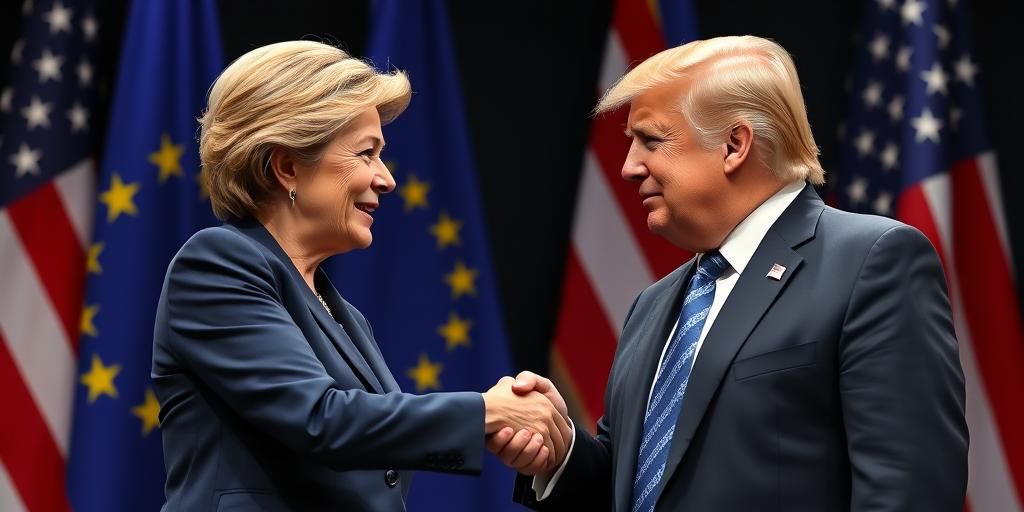
    Leaders from Europe’s two economic powerhouses, France and Germany, have expressed reservations following the recent trade agreement reached between EU Commission President Ursula von der Leyen and former US President Donald Trump. The deal, aimed at easing escalating trade tensions, has sparked mixed feelings across the European Union.

    German Chancellor Friedrich Merz warned that the agreement could “substantially damage” Germany’s economy. Similarly, French Prime Minister François Bayrou described the outcome as tantamount to “submission,” reflecting the concerns in Paris about the concessions made. Despite these sharp critiques, other EU member states have taken a more pragmatic approach, recognizing the deal’s potential to prevent a more damaging trade war.

    Balancing Trade and Diplomacy in a Divided EU

    The deal sets a 15% tariff on many EU exports to the US, a reduction from Trump’s initially threatened 30%. In exchange, Europe has agreed to increase purchases of American energy and reduce tariffs on selected US imports. The agreement was finalized during private discussions at Trump’s Turnberry golf resort in Scotland. Von der Leyen hailed it as a “huge deal,” while Trump expressed optimism that it would bring the two economic blocs closer together.

    However, the pact still requires unanimous approval from all 27 EU member countries, each with its own economic ties and dependencies on US trade. While no country has signaled outright rejection, the overall mood among European leaders has been subdued. Merz highlighted that both the US and EU economies could suffer as a result, though he acknowledged Brussels’ limited leverage against a US president determined to reshape global trade relationships.

    Bayrou’s stark criticism on social media underscored the political sensitivity of the deal within Europe. Meanwhile, Hungary’s Prime Minister Viktor Orbán, a known Trump ally, praised the US president’s negotiating skills. Spain’s Prime Minister Pedro Sánchez expressed cautious support but admitted it was “without any enthusiasm.”

    Some European officials expressed relief that a deal was reached. Finland’s Prime Minister noted that the agreement provides “much-needed predictability,” while Ireland’s Trade Minister Simon Harris emphasized the benefits for jobs, growth, and investment. EU Trade Commissioner Maroš Šefčovič defended the agreement, stressing that given the geopolitical backdrop of the Ukraine conflict, maintaining a strong transatlantic alliance comes with complex trade-offs.

    In the lead-up to negotiations, there was growing momentum within the EU to adopt “anti-coercion” measures, potentially restricting access of US companies to European markets in retaliation to American tariffs. However, faced with the prospect of 30% tariffs, European negotiators opted for a compromise to mitigate economic damage.

    Despite von der Leyen’s initial upbeat framing of the deal, by the following day even Manfred Weber, leader of the European People’s Party, described it as mere “damage control.” The deal’s finer points remain subject to ongoing technical discussions before full ratification.

    Across the Atlantic, the reaction from American business groups was similarly lukewarm. The National Foreign Trade Council welcomed the avoidance of a full-blown trade war but cautioned that the 15% tariffs might cause longer-term damage to US-EU relations and trust. They noted that previous tariff-free arrangements had fostered growth in key sectors like aerospace and pharmaceuticals on both sides of the Atlantic. Furthermore, the new framework leaves unaddressed contentious EU policies involving digital regulation and pharmaceutical pricing.

    This agreement highlights the complexities of transatlantic trade negotiations, demonstrating that even with a deal in place, balancing national interests and broader alliances remains a delicate endeavor.

    As the EU moves toward internal approval and further technical clarifications, the global community watches closely. How this trade deal will shape US-EU economic ties and geopolitical cooperation in the future is a question that remains open.

  • How Memory Shapes Next-Gen AI Agents in 2025

    Auto-uploaded image

    Memory: The Key to Smarter, More Adaptive AI Agents

    Memory has become an indispensable feature in evolving artificial intelligence agents. Moving beyond static, statistical models, modern AI agents leverage memory to maintain context, learn continuously, and adapt to complex tasks. This foundational capability differentiates simple chatbots from advanced, interactive digital assistants that engage in rich, humanlike conversations and decision-making processes.

    Why is memory so critical for AI agents? First, it allows them to remember user preferences, conversation history, and goal states across multiple sessions, enabling coherent, personalized, and context-aware responses. This context retention is especially important for sustaining meaningful multi-turn conversations or managing long-term workflows.

    Moreover, memory empowers AI agents to learn from both achievements and mistakes without needing to be retrained from scratch. By recalling past interactions and outcomes, agents refine their behavior over time, increasing reliability and accuracy. They can also use historical patterns to anticipate user needs, detect anomalies early, and proactively address potential issues before they arise.

    Memory further ensures task continuity for complex or multi-step projects that span multiple sessions. This allows AI agents to seamlessly pick up where they left off—delivering a smoother, more intuitive user experience.

    AI memory systems generally come in two varieties: short-term (or working memory), which temporarily holds recent inputs for immediate reasoning, and long-term memory, which preserves knowledge and experiences over time. Long-term memory often breaks down into distinct types:

    • Episodic Memory: Remembers specific events or conversations.
    • Semantic Memory: Stores general knowledge like facts and domain expertise.
    • Procedural Memory: Encodes skills and routines acquired through learning.

    In 2025, several standout platforms offer innovative memory architectures tailored for AI agents. Here are four leading examples shaping the landscape:

    1. Mem0
    Mem0 employs a hybrid memory design, integrating vector databases, knowledge graphs, and key-value storage. This mix delivers highly accurate recall—outperforming OpenAI’s benchmarks by 26% in recent tests—alongside fast responses and deep personalization. Its powerful search and layered recall capabilities make Mem0 ideal for developers needing fine-grained memory control in complex workflows, including multi-agent setups or niche domains.

    2. Zep
    Zep uses a temporal knowledge graph paired with structured session memory. Optimized for scalability, it integrates easily with popular AI development frameworks like LangChain and LangGraph. Zep significantly reduces latency by up to 90% while boosting recall accuracy by 18.5%, making it a strong choice for enterprise-grade LLM pipelines requiring persistent context and rapid deployment.

    3. LangMem
    Focused on summarization and selective memory, LangMem minimizes the memory footprint by strategically chunking information and prioritizing essential content. This approach fits perfectly with conversational agents constrained by limited context windows or API call restrictions, such as chatbots and customer service tools operating under tight computational budgets.

    4. Memary
    Memary centers around knowledge graph technologies designed to support reasoning-intensive applications. It features persistent modules that handle user preferences, conversation “rewinding,” and continuous knowledge graph expansion. This platform suits long-running agents tasked with logic-heavy or domain-specific workloads in sectors like legal research or enterprise knowledge management.

    The evolution of AI agent memory marks a pivotal step toward genuinely intelligent, adaptive systems. Platforms like Mem0, Zep, LangMem, and Memary set new benchmarks for embedding robust, efficient, and context-aware memory structures into AI. This progress paves the way for AI agents that move beyond scripted interactions, evolving instead into dynamic collaborators capable of growing alongside human partners.

    How AI memory capabilities will continue to transform agent performance—and influence the future of work and digital interaction—remains an exciting area for ongoing innovation and exploration.

  • Cambodia-Thailand Border Clashes Continue Amid Ceasefire Talks

    Auto-uploaded image

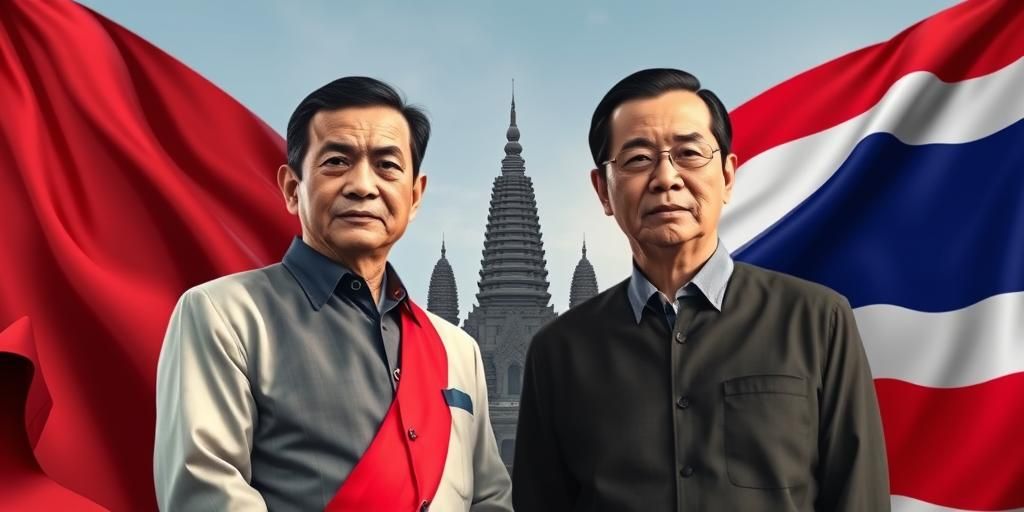
    Violent clashes between Cambodian and Thai forces have extended into their fourth consecutive day despite mounting international calls for a ceasefire. The border conflict, spurred by longstanding territorial disputes, has seen heavy artillery exchanges around the disputed Preah Vihear temple area, causing casualties on both sides.

    Both governments have signaled a willingness to engage in dialogue following diplomatic pressure, including intervention from the United States urging restraint and peaceful negotiation. However, neither side has yet halted the shelling, raising concerns about further escalation in this tense border region.

    Ongoing Conflict and Diplomatic Efforts

    The conflict rekindled earlier this week when small skirmishes rapidly escalated into intense shelling near the culturally and historically significant Preah Vihear temple, a UNESCO World Heritage site claimed by both Cambodia and Thailand. The temple has been at the center of contentious border disputes since the International Court of Justice’s 1962 ruling favored Cambodia’s sovereignty, yet both countries maintain overlapping claims in surrounding areas.

    The recent hostilities are the worst since a 2011 flare-up that left civilians displaced and casualties on both sides. Despite ceasefire appeals from ASEAN, the UN, and regional stakeholders, sporadic gunfire and shelling have persisted.

    In response to the violence, U.S. officials have called for immediate de-escalation and extended offers to mediate, highlighting the importance of stability in Southeast Asia amidst broader geopolitical shifts. Both Cambodia’s Prime Minister Hun Sen and Thailand’s Prime Minister Prayuth Chan-o-cha have publicly expressed openness to resuming talks, though concrete negotiations have yet to commence.

    Local communities near the border are bearing the brunt of the conflict, with reports of evacuations and damage to homes and farmland. Humanitarian organizations are monitoring the situation closely, emphasizing the need to protect civilians and uphold human rights.

    This renewed confrontation underscores the fragility of peace in contested border zones across Southeast Asia, where colonial-era boundaries continue to fuel disputes. It also highlights the delicate balancing act regional powers and external actors must navigate to maintain harmony in a geopolitically strategic area.

    As diplomatic channels begin to reopen, the international community watches intently. Will dialogue replace gunfire and pave the way for lasting resolution, or will the pre-existing tensions deepen into a protracted conflict? Time will reveal the trajectory of this volatile border dispute.

  • Google’s Gemini 2.5 Flash AI Now Runs Locally in India

    Auto-uploaded image

    Google has announced that its advanced AI model, Gemini 2.5 Flash, will now be processed locally within India. This development marks a significant step in the company’s strategy to enhance AI capabilities and data sovereignty in one of the world’s largest and fastest-growing digital markets.

    The Gemini series represents Google’s cutting-edge large language models (LLMs), designed to compete with other industry leaders in generative AI. Processing Gemini 2.5 Flash locally in India ensures faster response times, improved data privacy, and complies with regional regulations regarding data residency.

    This move aligns with a broader trend among global tech firms expanding their AI infrastructure closer to key markets. India’s burgeoning digital ecosystem and its focus on technology sovereignty have made it a prime location for local AI processing. Google’s decision complements efforts by Indian authorities to encourage data localization and responsible AI development.

    Previously, cloud-based AI models were often processed in centralized data centers located outside user countries, raising concerns about latency and data compliance. By relocating Gemini 2.5 Flash processing to India, Google not only addresses these issues but also supports the nation’s ambitious AI mission.

    Enhancing AI Accessibility and Compliance in India

    Processing the Gemini 2.5 Flash model within India reduces dependence on international data centers, which can lead to enhanced security and regulatory compliance. This is especially critical as India has been actively shaping its AI policies and data protection frameworks to govern how companies handle sensitive information.

    For developers and enterprises in India, local AI processing translates into more reliable and agile AI-powered applications. It also opens opportunities for collaboration on AI solutions tailored to local languages, contexts, and industries.

    Google’s initiative with Gemini 2.5 Flash builds on its ongoing support for India’s digital progress, previously demonstrated through partnerships in AI startups and platform adaptations. As India’s AI landscape continues expanding, localized processing of sophisticated models like Gemini will be a key enabler.

    While the global AI race accelerates, the localization of powerful AI models such as Gemini 2.5 Flash underscores the growing importance of tailoring AI infrastructure to regional requirements. How this will influence AI adoption and innovation within India’s unique market environment remains an important development to watch.

  • American Moves Family to Russia, Unexpectedly Caught in Ukraine Conflict

    Auto-uploaded image

    An American man who sought to relocate his family to Russia in an effort to “escape wokeness” has found himself directly impacted by the ongoing war in Ukraine. Originally intending to start a new life away from cultural and political shifts in the United States, he instead landed amid a complex and dangerous geopolitical conflict.

    From Cultural Escape to Warzone Reality

    The individual, whose story has drawn attention for its unusual twist, relocated his family to Russia hoping to avoid what he described as excessive “wokeness” in America. However, shortly after settling, the escalation of hostilities between Russia and Ukraine placed him and his family closer to the frontline of one of the most significant conflicts in Europe in recent years.

    The war in Ukraine began in early 2022 following Russia’s large-scale military invasion. It has since reshaped global alliances, triggered widespread humanitarian crises, and prompted unprecedented international sanctions against Russia.

    For foreigners living in Russia during this period, the situation has been increasingly precarious due to heightened security concerns, economic instability, and a tightening political climate. This American expatriate’s experience underscores the unpredictable consequences of relocating amid global tensions.

    His personal journey highlights the stark contrast between seeking refuge from cultural phenomena and facing the realities of international conflict. What started as a private family move took a dramatic turn with implications that extend far beyond individual intentions.

    As the war continues to influence everyday lives across the region and the world, stories like this serve as reminders of how global events can unexpectedly touch lives in unanticipated ways. How this man’s experience will unfold remains to be seen, reflecting the broader volatility that defines the current geopolitical landscape.

  • UK and India Seal Landmark Trade Deal Boosting Key Industries

    Auto-uploaded image

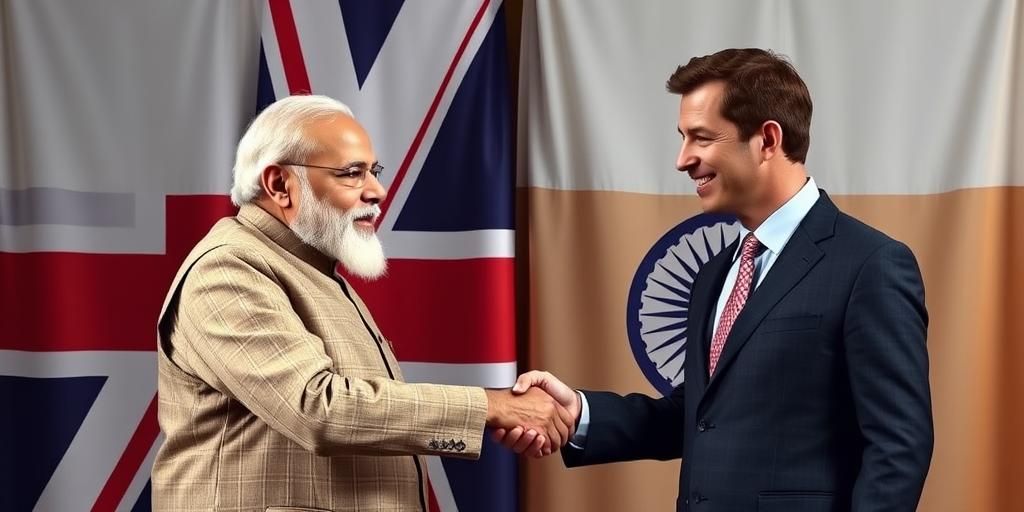
    Indian Prime Minister Narendra Modi is currently on a state visit to the United Kingdom to finalize a significant free trade agreement between the two nations. This milestone deal marks the most important economic partnership for the UK since Brexit and represents India’s first major free trade agreement outside Asia. Observers see this pact as a vital step toward strengthening long-term economic ties amid shifting global trade dynamics shaped by protectionist policies in other major economies.

    Trade Deal Details and Strategic Gains

    During his two-day visit, Modi is engaging in comprehensive discussions with UK Prime Minister Keir Starmer covering trade, defence, technology cooperation, and security. Modi will also meet King Charles as part of the official visit. Negotiated by Modi’s commerce minister Piyush Goyal, the agreement reflects India’s firm stance on several critical demands, including work visa concessions, recognition of professional qualifications, and exemptions on national insurance contributions for Indian workers temporarily in the UK.

    The agreement commits to eliminating tariffs on 99% of Indian exports to the UK, encompassing sectors like gems, textiles, engineered goods, leather, garments, and processed foods. In return, the UK will gradually reduce tariffs on 90% of its exports to India. Notable immediate cuts include slashing duties on Scotch whisky from 150% to 75%, eventually reaching 40% over the next decade. British car manufacturers—previously subjected to tariffs over 100%—will see duties lowered to 10% within an agreed quota. Additional benefits are expected for medical devices, pharmaceuticals, aircraft components, and electronics.

    Alongside economic advantages, this pact opens access for British businesses to India’s extensive government procurement sector, with promising prospects for industries such as clean energy, infrastructure, and transport. This aspect represents a significant first in India’s trade policy, traditionally cautious about foreign market access.

    India’s export-led sectors, particularly labour-intensive industries, stand to gain considerably. According to Amrita Saha, a research fellow at the University of Sussex’s Institute of Development Studies, over five million jobs in India are connected to exports to the UK, highlighting this deal’s potential to invigorate employment and foreign direct investment—a sector vital to India’s “Make in India” initiative but recently experiencing slower growth.

    However, agriculture, which employs more than 40% of India’s workforce, remains outside the deal, signaling a red line for New Delhi. This sector was also a sticking point in India’s stalled trade negotiations with the United States. Additionally, financial and legal services were excluded, with ongoing discussions over a bilateral investment treaty that would provide greater investor protection.

    The pact also sidesteps the UK’s controversial carbon border adjustment mechanism (CBAM). Designed to tax imports from countries with laxer emissions standards, CBAM has drawn criticism from India and other developing economies for potentially undermining their trade competitiveness. Experts caution that this unresolved issue could diminish the benefits of the free trade agreement for Indian exporters.

    Despite pending parliamentary ratification in both countries—likely delaying full implementation until mid-2026—the agreement is widely regarded as a breakthrough in UK-India relations. While the finer details remain to be scrutinized, this trade deal symbolizes a new chapter of cooperation between two historically connected yet economically distinct partners.

    As the UK seeks to establish new global trade alignments post-Brexit and India aims to boost its global economic footprint, this accord could reshape regional trade dynamics and industrial growth for years to come. Yet, the true impact will only emerge once the agreement takes full effect and both governments navigate remaining challenges.

    What this evolving partnership means for broader geopolitical stability and economic cooperation remains an important question for global observers.