Category: Global Affairs

  • America’s EV Adoption Lags Global Pace: What’s Driving It?

    Auto-uploaded image

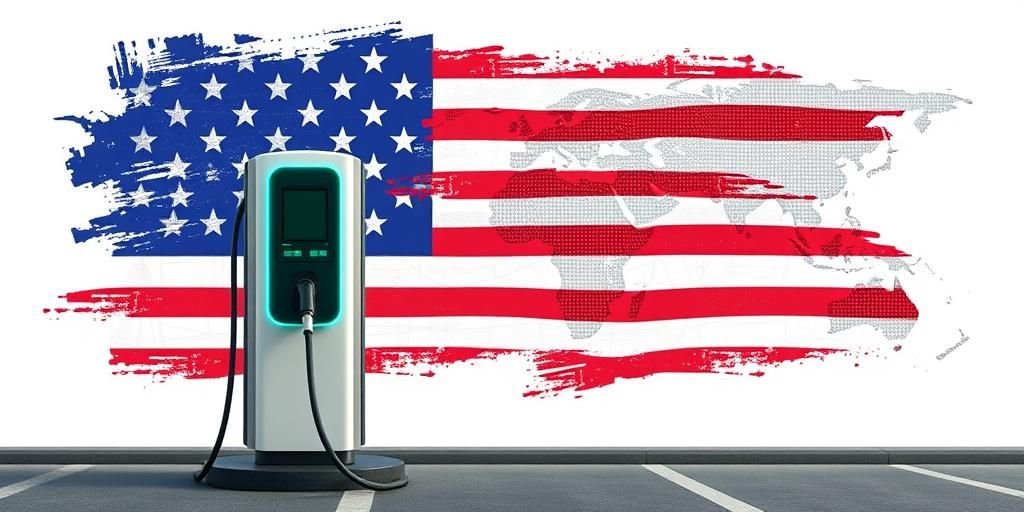
    The US electric vehicle (EV) market recently showed impressive growth, with over 1.2 million battery-powered cars sold last year – a fivefold increase in four years. Hybrid sales also surged. August saw EVs account for 10% of all car sales, a new high, and major manufacturers like General Motors, Ford, and Tesla reported record EV sales in recent months. This provided a bright spot for an industry navigating high interest rates and inflation.

    However, analysts point out that this surge was largely driven by a scramble to capitalize on a federal tax credit, offering up to $7,500 off eligible EVs, which expired in late September. With this incentive gone, carmakers anticipate a significant slowdown. Ford CEO Jim Farley described the future EV industry as “vibrant, but… smaller, way smaller than we thought,” while GM CFO Paul Jacobson projected a “precipitous” drop in demand.

    Global Disparity: Where the US Stands

    Despite recent gains, the United States, the world’s second-largest car market, trails many other nations in electric car adoption. In the UK, battery electric and hybrid vehicles comprised nearly 30% of new sales last year, a figure that has since risen. Europe sees roughly one in five new cars as electric, while China, the largest global car market, reported almost half of all sales as EVs last year, with expectations for them to become the majority this year. Countries like Norway and Nepal boast even higher EV penetration. Even in Latin America, Africa, and other parts of Asia, where overall shares are smaller, EV growth is rapidly accelerating.

    Experts attribute the slower US adoption partly to less aggressive government support compared to regions like China, the UK, and Europe, which have leveraged subsidies, trade-in programs, and regulations. Former President Joe Biden’s administration championed EV growth, aiming for 50% of US sales by 2030. His initiatives included stricter emissions standards, government fleet EV purchases, loans and grants for manufacturing, significant investment in charging infrastructure, and the expanded $7,500 buyer tax credit. Supporters emphasized this as a strategic imperative to ensure US automakers remained competitive against international, particularly Chinese, rivals.

    In contrast, former President Donald Trump, who has dismissed climate change concerns, advocates for repealing many of these measures, including the tax credit. He argues against policies that he believes compel consumers to buy EVs they don’t desire, favoring a market-driven approach. He underscored this stance by signing legislation opposing California’s plan to phase out gasoline-only car sales by 2035.

    Electric cars in the US, while becoming more accessible, still carry a higher price tag than comparable gasoline-powered vehicles. Kelley Blue Book data from August shows the average EV transaction price exceeding $57,000, roughly 16% more than the average for all cars. The most affordable option, a Nissan Leaf, costs around $30,000, whereas several models are available for under £20,000 in the UK. Adding another layer of complexity, Chinese EV manufacturers like BYD, known for their competitive pricing and rapid global expansion, are largely excluded from the US market due to high tariffs, a policy supported by both the Biden and Trump administrations.

    The auto industry now faces a dual challenge: the cessation of the federal tax credit and the imposition of new tariffs on imported cars and components, introduced by the Trump administration. Some manufacturers are adjusting strategies; Hyundai, for instance, plans to lower prices for its Ioniq EV range to offset the lost incentive. However, Tesla has indicated an increase in monthly lease payments for some models. Stephanie Brinley, an associate director at S&P Global Mobility, anticipates few companies will follow Hyundai’s lead, citing persistent tariff pressures. She warns that “next year is going to be hard,” forecasting a roughly 2% drop in overall car sales by 2026 due to these combined impacts.

    Carmakers were already moderating EV investments, and prospective policy shifts under a new administration could further curtail these commitments. Katherine Yusko, a research analyst at the American Security Project, states that the loss of subsidies is “a big hit to the EV industry,” leaving the US with “a lot of ground to make up.” Yet, Brinley also offers a nuanced perspective, questioning whether the US is truly “behind” in an evolving industry still exploring various technological solutions, suggesting it might be premature to declare electric vehicles as the singular, ultimate answer.

    The trajectory of America’s electric vehicle market remains a complex interplay of consumer preferences, technological evolution, and shifting government priorities. The path forward for sustainable transportation and global competition continues to unfold.
  • US Deports Iranians: A Rare Diplomatic Undertaking

    Auto-uploaded image

    The United States has begun the process of deporting 120 Iranian nationals, a move confirmed by Tehran amidst President Donald Trump’s intensified crackdown on immigration. These individuals are expected to return to Iran within the next day or two, according to Hossein Noushabadi, an official with Iran’s foreign ministry, speaking to the Tasnim state news agency.

    Most of those being flown back to Iran, via Qatar, had initially entered the U.S. without authorization, frequently through Mexico. In recent years, a rising number of Iranians have sought entry into the U.S., with many citing fears of persecution in their home country. While most are undocumented, Noushabadi indicated that some deportees possessed valid U.S. residency permits, noting that American officials had sought their consent for their return. He also urged the U.S. government to uphold the rights of Iranian migrants and their citizenship entitlements under international law.

    White House spokesperson Abigail Jackson affirmed the administration’s commitment, stating that it aims to execute the most extensive mass deportation initiative of undocumented individuals in history, utilizing all available resources. This action aligns with President Trump’s repeated pledges to reduce immigration flows and deport a significant number of people residing in the U.S. without legal status, including to nations with controversial human rights records. While the President has vowed to initiate a “largest deportation programme of criminals,” it remains unconfirmed whether the Iranian nationals being deported possess criminal records.

    Diplomatic Anomaly Amidst Geopolitical Tensions

    This deportation effort represents a rare instance of direct cooperation between Iran and the United States, two nations that lack formal diplomatic ties. The arrangement for the removal of Iranian nationals was facilitated through Iran’s U.S. Interests Section, located within the Pakistani embassy in Tehran. Reports suggest this flight is the initial phase of a broader agreement, with approximately 400 Iranian nationals anticipated to be deported from the U.S. in subsequent stages. The U.S. has previously established similar bilateral deportation agreements with various countries, including Panama, Costa Rica, Honduras, and Uganda.

    The administration’s aggressive deportation policies have drawn sharp criticism from human rights organizations both domestically and internationally. These groups voice concerns that migrants face potential harm upon being sent back to their countries of origin. Iran’s own human rights record has been a subject of significant international scrutiny. UN experts recently highlighted a “dramatic escalation” in the use of the death penalty within Iran this year, a practice the Iranian government defends as being reserved for “the most severe crimes,” a claim disputed by human rights advocates.

    What this means for the future of U.S.-Iran interactions, however limited, remains a crucial point of observation.

  • Tanzania and China Deepen Economic Ties with New Investment Hub

    Auto-uploaded image

    Economic and political collaboration between Tanzania and China is experiencing a significant uplift, poised for further growth through a pioneering investment center located in China’s Hunan province. This initiative underscores a unique trajectory in Tanzania’s foreign relations, building on its distinctive political economy within the sub-Saharan African region.

    Tanzania has often led the way in fostering closer ties with Beijing, marking several “first-in-Africa” milestones. Notably, it became the first African nation to establish an official investment center in China’s dedicated Africa zone within Hunan. This move signals a deeper, more structured approach to China-Africa cooperation.

    Hunan Model: A Blueprint for Development

    The new investment center is anchored in the “Hunan Model” agenda, which typically emphasizes agricultural modernization, industrial development, and poverty alleviation through targeted investments and trade. This approach aims to leverage local resources and expertise for sustainable growth, offering a template for broader China-Africa economic engagement.

    Historically, the relationship between Tanzania and China is rich with examples of groundbreaking collaboration. Key turning points include the construction of the Tanzania-Zambia Railway (TAZARA) in the 1970s, a monumental infrastructure project that connected landlocked Zambia to Tanzania’s coast and remains a symbol of South-South cooperation. Another pivotal moment was Tanzania’s strong support for Beijing’s admission to the United Nations in 1971, a critical diplomatic victory for the People’s Republic of China on the global stage.

    These historical precedents illuminate a forward-looking vision for China-Africa ambitions. The current focus remains firmly on bolstering industrial and agricultural development across the continent, directly contributing to the alleviation of poverty and hunger. The investment center in Hunan is a practical mechanism designed to realize these shared objectives, fostering direct engagement and facilitating capital flow.

    As this partnership evolves, how will this deeper engagement reshape the economic landscape for both Tanzania and the broader African continent?

  • US Open Star’s Viral Cap Gesture: A Story of Sportsmanship

    Auto-uploaded image

    In a heartwarming display of sportsmanship that quickly captured global attention, Polish tennis player Kamil Majchrzak recently met a young fan, gifting him a new cap after a widely circulated video showed an adult taking the original item from the child at the US Open.

    The incident, reportedly from Majchrzak’s match last Thursday, gained significant traction across social media platforms. The viral clip depicted Majchrzak handing his cap to a young boy in the crowd, only for a man standing beside the child to swiftly intercept it before the boy could claim the memento. The video showed the boy visibly upset and pleading for the return of the cap.

    The man involved in the original incident was identified by various media outlets as Piotr Szczerek, a Polish CEO. The footage sparked widespread criticism online from users who condemned the man’s actions.

    Beyond the Court: An Act of Kindness

    Responding to the viral moment, Majchrzak, a 29-year-old athlete ranked 76th in men’s singles, shared updates on his official Instagram account on Saturday. He posted clips showing him shaking hands with two boys and presenting them with gifts, including a cap identical to the one in the original video. “Today after warm up, I had a nice meeting,” Majchrzak wrote, adding a playful, “Do you recognise [the cap]?”

    He later shared a smiling photograph alongside the boy, now proudly wearing the gifted cap. “Hello World, together with Brock we wish you a great day!” Majchrzak captioned the image, bringing a positive resolution to the earlier controversy.

    Majchrzak’s US Open journey saw him deliver a remarkable comeback, defeating Russian ninth seed Karen Khachanov in a second-round match after being two sets down. However, his tournament ended prematurely during his third-round tie against Switzerland’s Leandro Riedi, where he was forced to retire in the first set due to an intercostal muscle tear.

    This gesture by Kamil Majchrzak serves as a powerful reminder that moments of human kindness can resonate far beyond the competitive arena, turning an unfortunate event into a beacon of positivity.

  • Europe Triggers UN Sanctions on Iran: A Diplomatic Countdown

    Auto-uploaded image

    In a significant move impacting global diplomacy, the United Kingdom, France, and Germany (known as the E3) have formally initiated the process to restore comprehensive United Nations sanctions against Iran. This action, notified to the UN, sets in motion a 30-day period for Tehran to address concerns regarding its nuclear program or face a deepened worldwide economic isolation.

    The decision by the European powers was not made lightly. Officials from the E3 nations underscored that extensive diplomatic efforts had been undertaken to prevent this step, highlighting that a window for last-minute negotiations remains before the “snapback” sanctions fully take effect. The upcoming annual high-level UN General Assembly in September is anticipated to be a crucial period for intensified diplomacy on this matter.

    At the heart of the E3’s decision lies Iran’s sustained non-compliance with the 2015 Joint Comprehensive Plan of Action (JCPOA), often referred to as the Iran nuclear deal. Since 2019, Iran has progressively rolled back its commitments under the accord, which aimed to curb its nuclear ambitions in exchange for sanctions relief. These breaches include vastly exceeding uranium enrichment and stockpile limits—reportedly 45 times the permitted 300kg and with purity levels beyond the agreement, alongside a substantial unaccounted stockpile of highly enriched uranium. Crucially, Iran has also restricted the International Atomic Energy Agency (IAEA), the UN’s nuclear watchdog, from accessing several key sites to verify the nature of its nuclear activities, despite allowing inspectors at the Bushehr site for refuelling.

    Mounting Tensions and Diplomatic Pathways

    UK Foreign Secretary David Lammy conveyed the European decision to Iranian Foreign Minister Abbas Araghchi, stating that Iran had made no substantive effort to meet conditions for an extension offer and failed to provide credible assurances about its nuclear program. Lammy emphasized that while this action was unavoidable, the onus remains on Iran to return to the negotiating table with a serious proposal.

    In response, Araghchi condemned the European move as “illegal and unjustified,” urging its reversal. However, he also signaled Iran’s readiness for “fair and balanced diplomatic negotiations” if the other parties demonstrate sincerity and good faith. This dual message reflects an internal debate within Iran, where factions are divided between seeking sanctions relief through negotiation and advocating for further confrontation. Meanwhile, the UN has called for both sides to use the 30-day period to prevent further escalation and find a peaceful path forward.

    The activation of the snapback mechanism holds significant implications. It transforms many existing, largely US and European, sanctions into UN-wide mandates, obligating all member states, including Russia and China, to enforce them. Some sanctions on Iran’s arms industry, currently not in force, will also be reinstated. Furthermore, the United States, as a permanent member of the UN Security Council, would gain a veto over the future lifting of these UN sanctions—a power it currently lacks. The E3’s timing was also critical, as their ability to reinstate these sanctions would have expired on October 15 with the broader nuclear deal.

    The situation carries risks of further escalation. Experts fear Iran might react by withdrawing from the Non-Proliferation Treaty (NPT), a cornerstone of global nuclear security. There are also concerns that the issue could draw heightened attention from figures like former US President Donald Trump and Israel, potentially leading to further regional instability. Iran’s leadership, currently reorganizing its defense and security structures, faces the challenge of building an internal consensus amid strong opposition from conservative elements in its parliament against enhanced IAEA inspections.

    As the diplomatic clock ticks, the coming weeks will reveal whether a serious breakthrough can be achieved, or if Iran is set to face a more isolated future.

  • UK Labour Signals Closer EU Ties with Youth Mobility & Trade Push

    Auto-uploaded image

    A significant shift is emerging in the United Kingdom’s approach to its relationship with the European Union. Keir Starmer’s lead negotiator on Europe, Nick Thomas-Symonds, has voiced strong enthusiasm for a proposed EU youth mobility scheme, signaling a broader intent to foster closer ties with the bloc.

    Thomas-Symonds, serving as the Cabinet Office minister overseeing UK-EU relations, conveyed his eagerness for a deal that would enable young people to travel and work more freely across Europe. This stance marks a notable departure from just a few months prior, when the UK government was reluctant even to discuss negotiations for such a program. His comments underscore a growing openness among ministers to deepen engagement with Brussels.

    The commitment extends beyond youth mobility. Thomas-Symonds also pledged to secure a new agricultural export agreement by early 2027. This ambitious timeline provides an 18-month window for negotiations, which are expected to involve complex discussions. British officials are likely to advocate for exemptions from certain EU regulations, such as those governing genetically modified crops. Conversely, some EU members, particularly France, may seek concessions from the UK, including a potential reversal of its pre-election pledge to ban foie gras imports.

    Navigating ‘Dynamic Alignment’ and Brexit’s Shadow

    A key principle guiding the UK’s renewed engagement will be “dynamic alignment” with EU standards. Thomas-Symonds explained that this means future UK regulations would evolve in parallel with European ones. Historically, this concept was a point of contention for many Brexit proponents who viewed it as surrendering regulatory control to Brussels. However, Thomas-Symonds reframed it as a strategic choice, asserting it is in the UK’s “national economic interest” to align with shared high standards, benefiting businesses across the country.

    This more conciliatory tone regarding a youth mobility scheme and deeper European ties reflects growing confidence within Labour circles. The party appears increasingly ready to shape the narrative on EU relations, even as it grapples with challenges posed by figures like Nigel Farage on immigration. Thomas-Symonds criticized Farage’s approach to the EU, stating he “wants Britain to fail.” While distancing himself from Farage’s strong language on immigration, the minister emphasized the importance of choosing one’s own words carefully.

    The direction of these negotiations could redefine the post-Brexit landscape for the UK and its European partners.

    What impact will these evolving discussions have on global perceptions of the UK’s international standing?

  • UK Signals Closer EU Ties with Youth Mobility and Trade Push

    Auto-uploaded image

    In a significant shift towards re-engaging with the European Union, the Labour Party’s lead negotiator on European affairs, Nick Thomas-Symonds, has expressed strong enthusiasm for a potential EU youth mobility scheme. This public endorsement signals a broader government intention to cultivate closer ties with the bloc, moving beyond the cautious approach of recent years.

    Mr. Thomas-Symonds, who serves as the Cabinet Office minister overseeing UK-EU relations, articulated his eagerness for a deal that would facilitate easier travel and work opportunities for young Britons across Europe. This marks a notable change in rhetoric, as just a few months prior, the government remained hesitant to even consider negotiations on such a scheme, often out of concern for re-igniting debates surrounding free movement post-Brexit.

    Forging Dual Paths: Youth Mobility and Agricultural Trade

    Beyond youth mobility, Mr. Thomas-Symonds also committed to securing a new agricultural export agreement with the EU by early 2027. This ambitious timeline allows the government approximately 18 months for negotiations. During these talks, British officials are expected to advocate for specific exemptions from EU regulations, such as those pertaining to genetically modified crops. Conversely, European nations, particularly France, may push for the UK to reconsider its pre-election commitment to ban foie gras imports.

    A key aspect of the UK’s proposed approach involves “dynamic alignment” with EU regulations. Mr. Thomas-Symonds explained that this principle means British rules would evolve in tandem with European standards. Historically, “dynamic alignment” was a contentious point for many Brexit supporters, who viewed it as surrendering regulatory autonomy to Brussels. However, Mr. Thomas-Symonds framed this alignment as a strategic choice, emphasizing its benefits for national economic interests and business efficiency across the country by adhering to common high standards.

    This evolving stance reflects a growing confidence within Labour circles regarding their ability to navigate and win public support for a more engaged European relationship. This comes even as they grapple with how to counter figures like Nigel Farage, whose strong anti-immigration messages continue to resonate with a segment of the electorate. Mr. Thomas-Symonds directly criticized Mr. Farage for his perceived unwillingness to foster any relationship with the EU, suggesting it stems from a desire for Britain’s failure. However, when pressed on Mr. Farage’s controversial language regarding asylum seekers, the minister distanced himself, stating, “We all use our own language. I wouldn’t use Nigel Farage’s language.”

    The renewed impetus behind these negotiations underscores a pragmatic shift in the UK’s post-Brexit foreign policy, prioritizing economic and social benefits through closer European cooperation. What these evolving relationships mean for the future of UK-EU integration remains a critical question.

  • US Imposes Sanctions on ICC Judges Investigating Netanyahu and Afghan War Crimes

    Auto-uploaded image

    The United States has recently announced sanctions targeting judges and officials of the International Criminal Court (ICC) involved in investigations concerning Israeli Prime Minister Benjamin Netanyahu and alleged war crimes in Afghanistan. This move deepens the ongoing tensions between Washington and the ICC, highlighting the complex intersection of international justice and geopolitical interests.

    Specifically, the US Treasury Department imposed financial restrictions on ICC Prosecutor Karim Khan and three judges, accusing them of undermining American sovereignty. These sanctions block any US-based assets and prohibit Americans from engaging in transactions with the designated individuals.

    Background: ICC Probes and US-OIC Relations

    The ICC has been investigating alleged war crimes committed in the Palestinian territories, including actions linked to Israeli officials such as Netanyahu. Meanwhile, another inquiry focuses on abuses during the US-led war in Afghanistan. The US government, which is not a party to the ICC, has repeatedly voiced strong opposition to these probes, labeling them as politically motivated.

    Washington’s stance stems partly from concerns that ICC investigations could target US military personnel or allies without proper oversight from national courts. Historically, the US has employed various means to shield its citizens from ICC jurisdiction, including legislation like the American Service-Members’ Protection Act.

    The sanction announcement follows previous US actions that sought to limit ICC operations by withholding funding and pressuring other countries to reject the court’s authority.

    Karim Khan, the ICC Prosecutor, has emphasized the court’s independence and the importance of holding all parties accountable for violations of international humanitarian law, regardless of political pressures.

    While the sanctions may complicate the ICC’s work, they also underline the ongoing friction between mechanisms of global justice and the world’s major powers. As the ICC continues its investigations, the international community watches closely how these legal and political dynamics will evolve.

    What consequences these measures could have for international accountability remains an open question.

  • US Senator JD Vance Criticizes Ukraine War Funding Ahead of Alaska Summit

    Auto-uploaded image

    As global attention focuses on the upcoming Alaska summit, US Senator JD Vance has publicly voiced strong opposition to ongoing American financial support for the conflict in Ukraine. Vance’s remarks underscore a growing debate within US politics about the country’s role in funding the war effort against Russia.

    Vance, a prominent Republican figure, stated bluntly that the United States is “done with funding the Ukraine war business.” His comments reflect a broader skepticism among some US lawmakers regarding continued aid, questioning the sustainability and strategic benefits of US involvement amid an increasingly complex geopolitical landscape.

    Shifting US Perspectives on Ukraine Aid

    The conflict between Russia and Ukraine, ongoing since 2014 and significantly intensifying after Russia’s full-scale invasion in early 2022, has drawn substantial international attention and support for Ukraine. The Biden administration, along with Congress, has committed billions in military, economic, and humanitarian assistance to Kyiv, aiming to bolster Ukraine’s defenses and stabilize the region.

    However, this aid has become a contentious issue domestically. Critics like Senator Vance argue that the financial burden on the US taxpayer is mounting without clear progress or exit strategies. These voices often emphasize the need to reassess American priorities, especially as inflationary pressures and domestic challenges continue to impact the US economy.

    On the other hand, many policymakers and analysts maintain that supporting Ukraine remains critical to countering Russian aggression and upholding international norms, warning that disengagement could embolden adversaries and lead to wider instability in Europe.

    The upcoming summit in Alaska, intended to bring together US and Russian officials amid strained relations, adds another layer of complexity. With dialogue between Washington and Moscow fraught and US legislators divided over support policies, discussions at the summit may influence future approaches to the conflict and diplomatic engagement.

    Senator Vance’s candid stance highlights the ongoing debate within Washington, emphasizing how the US’s role on the global stage continues to evolve in response to geopolitical challenges and domestic pressures.

    As global observers watch the summit and US policy shifts closely, the question remains: How will America’s position on Ukraine shape the broader diplomatic landscape and international security moving forward?