Category: Global Affairs

  • US Doubles Tariffs on India Amid Russia Oil Dispute

    Auto-uploaded image

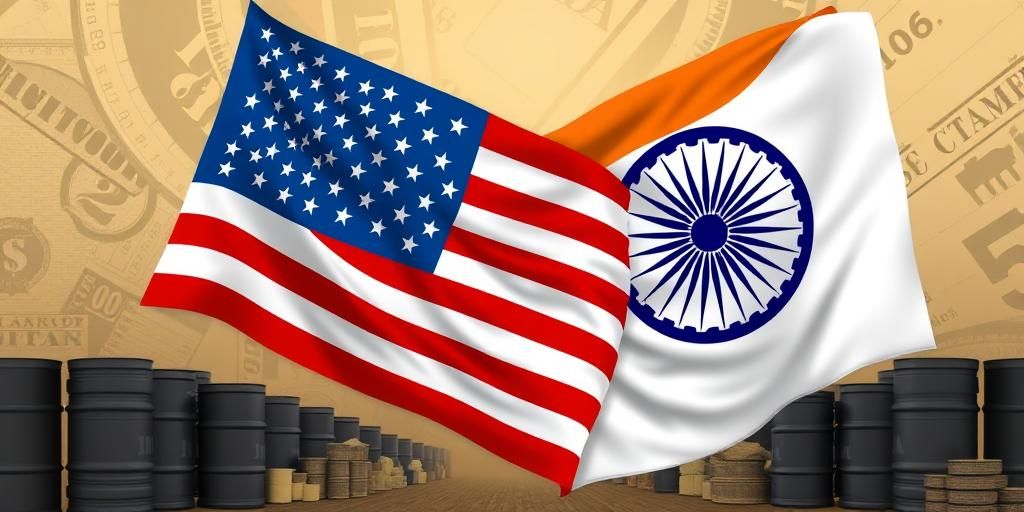
    Prime Minister Narendra Modi convened an urgent high-level cabinet meeting on Friday afternoon to evaluate the fallout from the recent sharp tariff increase imposed by the United States on Indian exports. This measure, announced by US President Donald Trump, raises tariffs on Indian goods to a punitive 50%, targeting India’s ongoing trade with Russia. The announcement abruptly halted a period of generally improving relations between New Delhi and Washington.

    Trump made it clear that no further trade negotiations with India would occur until the dispute over tariffs is resolved. When asked about potential talks, the US President responded simply, “No, not until we get it resolved,” leaving uncertainty over whether this refers to the resolution of the Ukraine conflict or other trade issues underlying the earlier 25% duties imposed.

    Escalating Trade Tensions Linked to Russian Oil

    The expanded tariffs are part of Trump’s broader strategy to pressure Moscow economically, as India is the world’s second-largest buyer of Russian oil. This latest 25% surcharge, added to the existing 25% reciprocal duty, effectively doubles the tariff rate on Indian exports to the US, its largest export destination. These new tariffs will come into force on August 27, signaling a tougher US stance amid ongoing geopolitical tensions over the Ukraine war.

    Earlier, Trump set a 50-day ultimatum for Russia to agree to a ceasefire or face additional US sanctions, which he later shortened to 12 days. Although the deadline passed recently, the US proceeded with punitive tariffs on India and other Russian oil customers, highlighting the growing complexity of global trade relations influenced by geopolitical conflicts.

    Moody’s Ratings recently reported that India’s robust domestic demand and the strength of its services sector will help absorb some of the economic strain caused by these tariffs. However, they warned that continued Russian oil imports under sanctions could reduce India’s real GDP growth by roughly 0.3 percentage points from the projected 6.3% for fiscal year 2025-26.

    The tariffs are significantly higher than those faced by many Asia-Pacific countries, posing a serious challenge to India’s global trade competitiveness. The move has also prompted major US retailers like Amazon, Walmart, and Target to pause new orders from India, particularly in sectors such as textiles and apparel, raising concerns about immediate impacts on Indian exporters.

    On the Indian stock market, tariff jitters contributed to early declines in benchmark indices. Investors reacted nervously as foreign institutional investors pulled out capital while domestic buyers stepped in to cushion the sell-off.

    Internationally, the new tariffs have drawn criticism from UN Secretary-General Antonio Guterres, who expressed that all trade wars are damaging and should be avoided. Guterres underscored his concern for the world’s poorest populations, who are likely to suffer most from increased tariffs and economic disruptions.

    Meanwhile, the Trump administration pushed ahead with broad tariff hikes on imports from over 60 countries, reaching levels not seen in the US since the 1930s. These moves aim to boost domestic manufacturing and investment, though analysts warn of potential negative effects on US consumers and global economic growth.

    As India grapples with these sudden changes, its government is reportedly considering targeted support measures for groups hardest hit, including textiles and chemical exporters. These efforts are part of India’s larger export promotion strategy, seeking to mitigate the adverse effects of US tariffs.

    This evolving trade dispute highlights the intertwining of geopolitical tensions and economic policy in shaping the global trade environment. Whether there will be a diplomatic breakthrough remains uncertain as both countries brace for the impact of this tariff escalation.

    What remains clear is that these developments could reshape trade dynamics in the Indo-Pacific and beyond, with consequences that extend far outside the immediate bilateral relationship.

  • Russia Condemns US Tariffs, Leans on BRICS Amid Growing Trade Tensions

    Auto-uploaded image

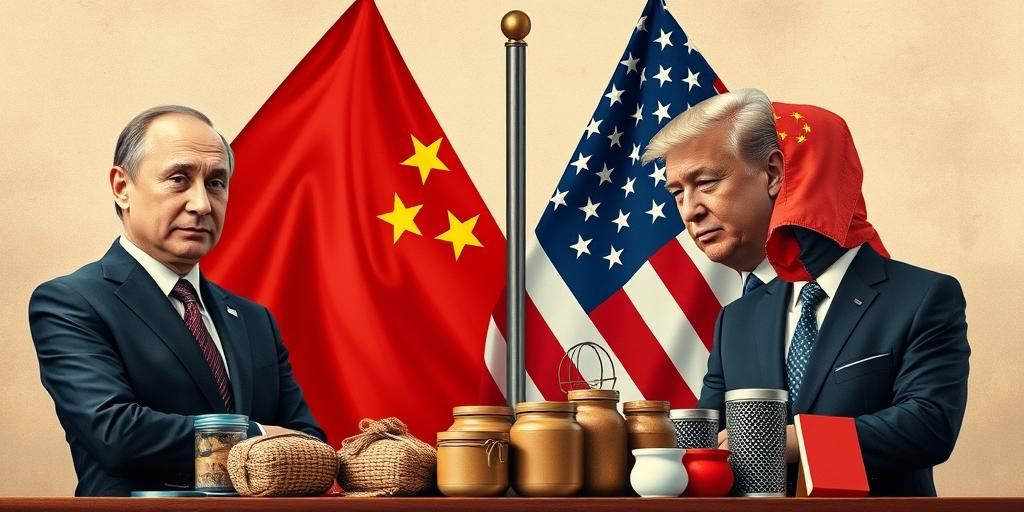
    Russia has publicly denounced the recent US tariff hikes, accusing Washington of pursuing a neocolonial agenda aimed at preserving its dominance over nations in the Global South. The comments come shortly after US President Donald Trump announced significant tariff increases targeting multiple countries, including India, for importing Russian oil.

    Russia’s Response to US Tariff Policies and BRICS Cooperation

    Maria Zakharova, spokesperson for the Russian Foreign Ministry, criticized the United States for wielding economically motivated sanctions and tariffs as political tools. She described these measures as efforts to suppress countries seeking independent paths in the evolving world order. According to Zakharova, Washington’s inability to accept the gradual decline of its global hegemony drives these coercive economic actions.

    “Sanctions and restrictions have regrettably become a hallmark of today’s international landscape, impacting nations worldwide,” Zakharova stated. “The US clings to a neocolonial strategy, applying pressure on states that choose autonomy in their foreign policies.”

    Significantly, Russia emphasized its strong alliance with the BRICS coalition—originally made up of Brazil, Russia, India, China, and South Africa, now expanded to include Egypt, Ethiopia, Iran, the UAE, and soon Indonesia. Zakharova affirmed that the bloc provides vital support in countering what Russia calls “unlawful unilateral sanctions” and tariff wars aimed at undermining national sovereignty.

    The Russian official marked the rising tariff barriers as a departure from principles of free trade once championed by Western nations. She also warned that Washington’s approach risks exacerbating economic slowdown, disrupting global supply chains, and fragmenting international markets.

    On the heels of Trump’s announcement to significantly increase tariffs on Indian imports of Russian oil, New Delhi responded sharply. The Indian government reminded Washington that it had initially encouraged Indian imports from Russia following the outbreak of the Ukraine conflict. India also pushed back on criticism from the EU targeting Indian refiners, asserting that their purchases stem from global market necessities, unlike other nations whose trade with Russia is less essential.

    This escalating trade dispute highlights the growing divergence between US policy and the strategic interests of emerging economies, many of which are reinforcing ties within multilateral frameworks like BRICS to forge a multipolar global order.

    As this dynamic unfolds, the long-term impact on international trade relations and global power structures remains to be seen. The resilience of alliances such as BRICS may well redefine economic cooperation and geopolitical alignments in the years ahead.

  • Lessons from Clement Attlee for Keir Starmer’s Leadership

    Auto-uploaded image

    Reflecting on Leadership: Attlee’s Legacy and Starmer’s Challenge

    Clement Attlee, Britain’s post-war Labour prime minister, is often remembered not just for his policies but for his integrity. As Keir Starmer navigates his leadership amid complex international and domestic challenges, parallels are drawn between these two figures from different eras.

    Attlee’s premiership was marked by momentous decisions, including overseeing India’s transition to independence, which Martin Kettle’s recent article touched upon. Contrary to the assumption that Attlee hastily withdrew Britain from India, historical records show he had a deep engagement with the subcontinent’s political landscape long before becoming prime minister. As a member of the Simon Commission in 1927, Attlee visited India multiple times, understood the complex factions, and recognized the difficulties independence would bring—including the upheaval of partition. While he could not predict the ensuing violence, Attlee’s government committed itself earnestly to honoring Britain’s promises for Indian self-rule.

    Keir Starmer faces comparable diplomatic challenges today, particularly concerning the Israeli-Palestinian conflict. Observers suggest that like Attlee, Starmer may rise to the occasion, balancing Labour’s historical principles with the evolving geopolitical realities.

    Another historical episode often cited in discussions about Labour leadership is the 1956 Suez Crisis, a pivotal moment reflecting Britain’s diminished global power and its complex relationship with the United States. Ernest Bevin—a towering figure in Labour history who served as minister of labour during World War II and as foreign secretary afterward—sought continued US military presence in Europe but was skeptical of the so-called “special relationship.” The Suez Crisis laid bare the limits of American support for Britain’s imperial interests, as the US prioritized its own strategic goals over those of its allies.

    This crisis galvanized European cooperation, notably in France, which emerged determined to pursue an independent foreign policy and military capability beyond transatlantic influence. The crisis accelerated moves toward a common European market and an advanced French defense program, including nuclear weapons development. Had Attlee been prime minister instead of Anthony Eden during Suez, many historians argue, Britain might have avoided the collusion with France and Israel that remains a controversial chapter. Above all, Attlee’s hallmark was a principled integrity missing in Eden’s handling of the crisis.

    While reflections on Labour’s past illuminate its leaders’ qualities and mistakes, they also underscore a continuous thread of navigating Britain’s place on the world stage amid shifting power balances. Starmer’s invocation of Harold Wilson and David Lammy’s admiration for Ernest Bevin indicate a search for historical guidance rather than straightforward replication.

    Lighthearted anecdotes from the era add a human dimension to these figures: for instance, Attlee’s wife, reportedly a poor driver, once accidentally collided with another motorist while chauffeuring the prime minister on a foggy night in London—fortunately, with no injuries.

    Labour’s current leadership faces the task of balancing historical legacy with forward-looking policies, particularly as global events challenge Britain’s diplomatic and political strategies. Whether Keir Starmer can embody the integrity and thoughtful leadership of Attlee remains an open question, inviting close attention from observers worldwide.

    What this means for the future direction of Labour and Britain’s role in global affairs is a compelling question as history and present challenges converge.

  • India’s Rising Reliance on Russian Oil Amid Global Sanctions

    Auto-uploaded image

    India’s energy landscape has shifted dramatically in recent years, with Russian crude oil emerging as the nation’s primary import source. Once negligible, making up just 0.2% before the Russia-Ukraine conflict, Russian oil now accounts for roughly 40% of India’s crude intake—a staggering transformation shaped by geopolitical tensions and global sanctions.

    From Cold War Ties to Modern Energy Dependencies

    India’s longstanding relationship with Russia, rooted in Cold War-era diplomacy, plays a significant role in this development. While India championed a policy of non-alignment during the Cold War, it maintained close ties with the Soviet Union, especially through military cooperation and technology exchanges. Despite the Soviet Union’s collapse, Russia remains India’s top arms supplier, underpinning a strategic partnership that extends well beyond defense.

    This historical alignment has influenced India’s recent energy choices. After Russia’s invasion of Ukraine in February 2022, many Western countries imposed sanctions, including oil import bans aimed at crippling Moscow’s economy. However, as traditional Russian customers curtailed their purchases, Russia turned to alternative buyers, including India and China, offering steep discounts.

    According to data from Kpler, India’s crude oil imports from Russia reached a peak of 2.15 million barrels per day (bpd) in May 2023. By July 2024, Russian crude still constituted about 41% of India’s total oil imports, overtaking suppliers like Iraq (20%) and Saudi Arabia (11%). Currently, India imports around 1.75 to 1.78 million bpd of Russian oil, compared to approximately 900,000 bpd from Iraq and 700,000 bpd from Saudi Arabia.

    One of the driving forces behind this surge is economic. With sanctions restricting Russia’s access to Western markets, Russia discounted its crude oil by as much as $40 below Brent benchmark prices at peak. Reuters data shows that between January and September 2023, India paid around $525.60 per metric ton for Russian crude, roughly $5 less per barrel than Iraqi oil. The Indian energy sector reportedly saved about $13 billion on oil imports over two fiscal years, according to ICRA, reflecting the financial incentives tied to these purchases.

    However, India’s growing reliance on Russian oil has drawn international scrutiny. Former US President Donald Trump publicly criticized India’s approach, threatening a 25% tariff on Indian goods, coupled with “penalties” for India’s continued intake of Russian energy. Trump called India “Russia’s largest buyer of energy along with China” and suggested sanctions against all Russian oil buyers unless Moscow made a peace concession in Ukraine within 50 days.

    India’s domestic energy demand underpins these complex decisions. The country consumes approximately 5.2 million barrels of oil daily, importing nearly 85% of this supply. Despite efforts such as the discovery of Bombay High in the 1970s, indigenous production remains insufficient to meet rising demand.

    Throughout the Ukraine conflict, New Delhi has maintained a position of neutrality. Petroleum and Natural Gas Minister Hardeep Singh Puri has argued that Indian purchases helped stabilize global oil prices, preventing a dramatic spike. “Had India not bought Russian oil,” he noted in April 2024, “prices would have gone through the roof.”

    Reflecting this trend, India’s crude oil import bill from Russia escalated from under $2.5 billion in the 2021-22 financial year to over $31 billion in 2022-23. The figure surged further to more than $140 billion in 2023-24, underscoring the scale of India’s pivot toward Russia amid a shifting global energy landscape.

    As global powers navigate sanctions, diplomacy, and energy security, India’s evolving ties with Russian oil raise important questions about balancing geopolitical pressures and domestic needs. The long-term impact of this realignment on regional and international stability remains a subject to watch closely.

  • China Slams US on Trade Hypocrisy Over Russia and Beijing

    Auto-uploaded image

    China has sharply criticized the United States, accusing Washington of double standards regarding trade relations with Russia and China. The Chinese government questions why the US maintains sanctions on Beijing’s economic activities while continuing trade ties with Russia amid the Ukraine conflict.

    Chinese officials emphasize their frustration over what they see as Washington’s inconsistent approach. While the US has imposed sweeping restrictions on Chinese companies citing national security concerns, it has simultaneously allowed considerable trade with Russia, despite Western efforts to isolate Moscow over its invasion of Ukraine.

    This dispute highlights the growing tensions in US-China relations, which have been fraught with disputes over technology, human rights, and geopolitical influence for several years. China’s position reflects its broader opposition to what it considers unfair and politicized economic measures by the West.

    The US has justified its sanctions against Chinese firms by alleging involvement in activities contrary to US interests, often linked to military or surveillance technologies. Conversely, the US maintains sanctions and export controls targeting Russia’s economy but still permits certain trade activities, especially in energy and raw materials.

    China’s criticism comes at a time of complex global alignments, where Beijing continues to deepen ties with Moscow, partly to counterbalance US influence. The US and its allies remain cautious about any coordination between China and Russia that could challenge Western-led economic and diplomatic norms.

    Trade, Sanctions, and Geopolitical Tensions

    This latest exchange underscores the challenges in maintaining a unified international stance on trade and sanctions amidst shifting alliances. The US approach to China focuses heavily on restricting technology transfers and pressuring Beijing over human rights issues and perceived unfair trade practices. Meanwhile, Moscow’s conflict with Ukraine complicates efforts to enforce cohesive economic responses.

    As China questions the rationale behind the US’s disparate treatment, observers note that such disputes could further strain global economic relations. Washington’s balancing act between punishing Moscow and confronting Beijing signals an increasing complexity in global diplomacy, with ramifications for international trade systems and geopolitical stability.

    What this means for international cooperation on trade sanctions and economic diplomacy remains uncertain as these major powers navigate an increasingly fractious global landscape.

  • EU Leaders React with Caution to New US Trade Deal

    Auto-uploaded image

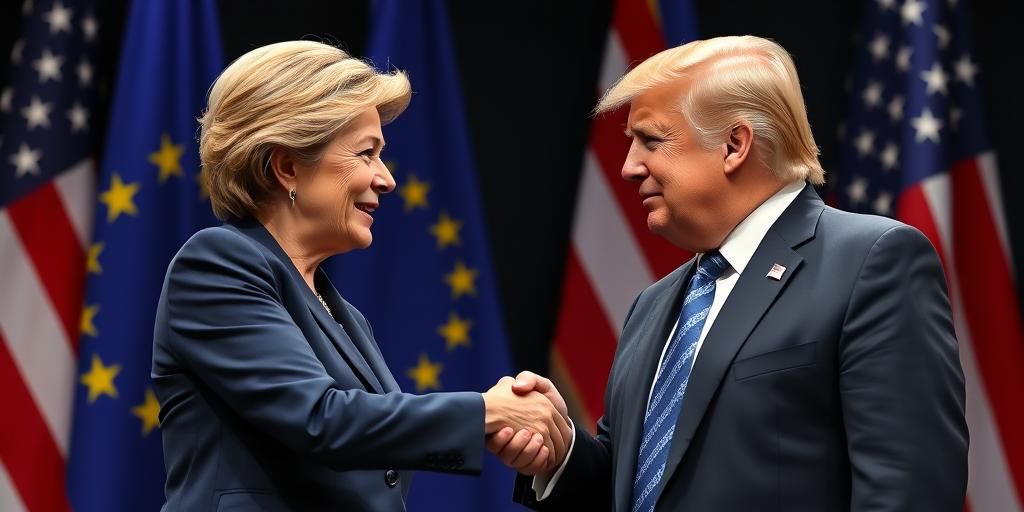
    Leaders from Europe’s two economic powerhouses, France and Germany, have expressed reservations following the recent trade agreement reached between EU Commission President Ursula von der Leyen and former US President Donald Trump. The deal, aimed at easing escalating trade tensions, has sparked mixed feelings across the European Union.

    German Chancellor Friedrich Merz warned that the agreement could “substantially damage” Germany’s economy. Similarly, French Prime Minister François Bayrou described the outcome as tantamount to “submission,” reflecting the concerns in Paris about the concessions made. Despite these sharp critiques, other EU member states have taken a more pragmatic approach, recognizing the deal’s potential to prevent a more damaging trade war.

    Balancing Trade and Diplomacy in a Divided EU

    The deal sets a 15% tariff on many EU exports to the US, a reduction from Trump’s initially threatened 30%. In exchange, Europe has agreed to increase purchases of American energy and reduce tariffs on selected US imports. The agreement was finalized during private discussions at Trump’s Turnberry golf resort in Scotland. Von der Leyen hailed it as a “huge deal,” while Trump expressed optimism that it would bring the two economic blocs closer together.

    However, the pact still requires unanimous approval from all 27 EU member countries, each with its own economic ties and dependencies on US trade. While no country has signaled outright rejection, the overall mood among European leaders has been subdued. Merz highlighted that both the US and EU economies could suffer as a result, though he acknowledged Brussels’ limited leverage against a US president determined to reshape global trade relationships.

    Bayrou’s stark criticism on social media underscored the political sensitivity of the deal within Europe. Meanwhile, Hungary’s Prime Minister Viktor Orbán, a known Trump ally, praised the US president’s negotiating skills. Spain’s Prime Minister Pedro Sánchez expressed cautious support but admitted it was “without any enthusiasm.”

    Some European officials expressed relief that a deal was reached. Finland’s Prime Minister noted that the agreement provides “much-needed predictability,” while Ireland’s Trade Minister Simon Harris emphasized the benefits for jobs, growth, and investment. EU Trade Commissioner Maroš Šefčovič defended the agreement, stressing that given the geopolitical backdrop of the Ukraine conflict, maintaining a strong transatlantic alliance comes with complex trade-offs.

    In the lead-up to negotiations, there was growing momentum within the EU to adopt “anti-coercion” measures, potentially restricting access of US companies to European markets in retaliation to American tariffs. However, faced with the prospect of 30% tariffs, European negotiators opted for a compromise to mitigate economic damage.

    Despite von der Leyen’s initial upbeat framing of the deal, by the following day even Manfred Weber, leader of the European People’s Party, described it as mere “damage control.” The deal’s finer points remain subject to ongoing technical discussions before full ratification.

    Across the Atlantic, the reaction from American business groups was similarly lukewarm. The National Foreign Trade Council welcomed the avoidance of a full-blown trade war but cautioned that the 15% tariffs might cause longer-term damage to US-EU relations and trust. They noted that previous tariff-free arrangements had fostered growth in key sectors like aerospace and pharmaceuticals on both sides of the Atlantic. Furthermore, the new framework leaves unaddressed contentious EU policies involving digital regulation and pharmaceutical pricing.

    This agreement highlights the complexities of transatlantic trade negotiations, demonstrating that even with a deal in place, balancing national interests and broader alliances remains a delicate endeavor.

    As the EU moves toward internal approval and further technical clarifications, the global community watches closely. How this trade deal will shape US-EU economic ties and geopolitical cooperation in the future is a question that remains open.

  • Cambodia-Thailand Border Clashes Continue Amid Ceasefire Talks

    Auto-uploaded image

    Violent clashes between Cambodian and Thai forces have extended into their fourth consecutive day despite mounting international calls for a ceasefire. The border conflict, spurred by longstanding territorial disputes, has seen heavy artillery exchanges around the disputed Preah Vihear temple area, causing casualties on both sides.

    Both governments have signaled a willingness to engage in dialogue following diplomatic pressure, including intervention from the United States urging restraint and peaceful negotiation. However, neither side has yet halted the shelling, raising concerns about further escalation in this tense border region.

    Ongoing Conflict and Diplomatic Efforts

    The conflict rekindled earlier this week when small skirmishes rapidly escalated into intense shelling near the culturally and historically significant Preah Vihear temple, a UNESCO World Heritage site claimed by both Cambodia and Thailand. The temple has been at the center of contentious border disputes since the International Court of Justice’s 1962 ruling favored Cambodia’s sovereignty, yet both countries maintain overlapping claims in surrounding areas.

    The recent hostilities are the worst since a 2011 flare-up that left civilians displaced and casualties on both sides. Despite ceasefire appeals from ASEAN, the UN, and regional stakeholders, sporadic gunfire and shelling have persisted.

    In response to the violence, U.S. officials have called for immediate de-escalation and extended offers to mediate, highlighting the importance of stability in Southeast Asia amidst broader geopolitical shifts. Both Cambodia’s Prime Minister Hun Sen and Thailand’s Prime Minister Prayuth Chan-o-cha have publicly expressed openness to resuming talks, though concrete negotiations have yet to commence.

    Local communities near the border are bearing the brunt of the conflict, with reports of evacuations and damage to homes and farmland. Humanitarian organizations are monitoring the situation closely, emphasizing the need to protect civilians and uphold human rights.

    This renewed confrontation underscores the fragility of peace in contested border zones across Southeast Asia, where colonial-era boundaries continue to fuel disputes. It also highlights the delicate balancing act regional powers and external actors must navigate to maintain harmony in a geopolitically strategic area.

    As diplomatic channels begin to reopen, the international community watches intently. Will dialogue replace gunfire and pave the way for lasting resolution, or will the pre-existing tensions deepen into a protracted conflict? Time will reveal the trajectory of this volatile border dispute.

  • American Moves Family to Russia, Unexpectedly Caught in Ukraine Conflict

    Auto-uploaded image

    An American man who sought to relocate his family to Russia in an effort to “escape wokeness” has found himself directly impacted by the ongoing war in Ukraine. Originally intending to start a new life away from cultural and political shifts in the United States, he instead landed amid a complex and dangerous geopolitical conflict.

    From Cultural Escape to Warzone Reality

    The individual, whose story has drawn attention for its unusual twist, relocated his family to Russia hoping to avoid what he described as excessive “wokeness” in America. However, shortly after settling, the escalation of hostilities between Russia and Ukraine placed him and his family closer to the frontline of one of the most significant conflicts in Europe in recent years.

    The war in Ukraine began in early 2022 following Russia’s large-scale military invasion. It has since reshaped global alliances, triggered widespread humanitarian crises, and prompted unprecedented international sanctions against Russia.

    For foreigners living in Russia during this period, the situation has been increasingly precarious due to heightened security concerns, economic instability, and a tightening political climate. This American expatriate’s experience underscores the unpredictable consequences of relocating amid global tensions.

    His personal journey highlights the stark contrast between seeking refuge from cultural phenomena and facing the realities of international conflict. What started as a private family move took a dramatic turn with implications that extend far beyond individual intentions.

    As the war continues to influence everyday lives across the region and the world, stories like this serve as reminders of how global events can unexpectedly touch lives in unanticipated ways. How this man’s experience will unfold remains to be seen, reflecting the broader volatility that defines the current geopolitical landscape.

  • UK and India Seal Landmark Trade Deal Boosting Key Industries

    Auto-uploaded image

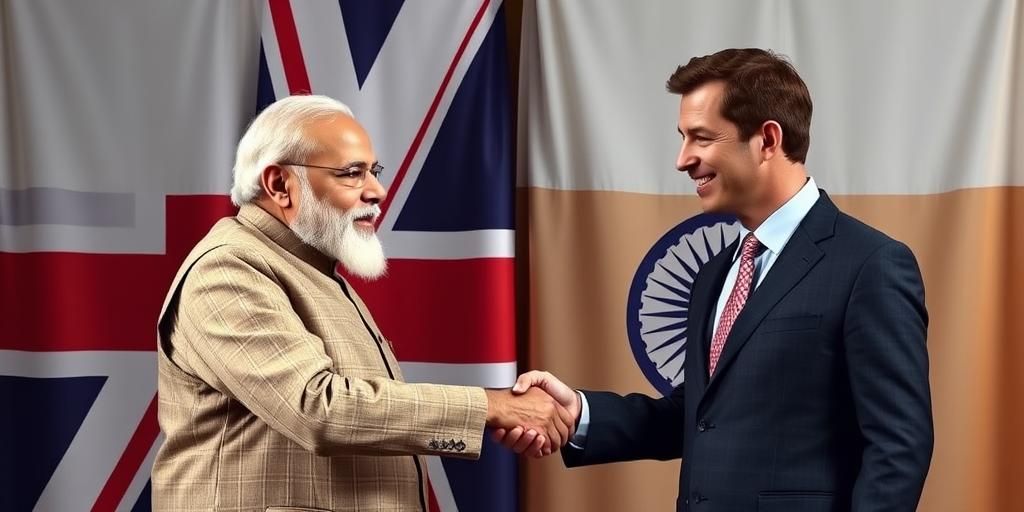
    Indian Prime Minister Narendra Modi is currently on a state visit to the United Kingdom to finalize a significant free trade agreement between the two nations. This milestone deal marks the most important economic partnership for the UK since Brexit and represents India’s first major free trade agreement outside Asia. Observers see this pact as a vital step toward strengthening long-term economic ties amid shifting global trade dynamics shaped by protectionist policies in other major economies.

    Trade Deal Details and Strategic Gains

    During his two-day visit, Modi is engaging in comprehensive discussions with UK Prime Minister Keir Starmer covering trade, defence, technology cooperation, and security. Modi will also meet King Charles as part of the official visit. Negotiated by Modi’s commerce minister Piyush Goyal, the agreement reflects India’s firm stance on several critical demands, including work visa concessions, recognition of professional qualifications, and exemptions on national insurance contributions for Indian workers temporarily in the UK.

    The agreement commits to eliminating tariffs on 99% of Indian exports to the UK, encompassing sectors like gems, textiles, engineered goods, leather, garments, and processed foods. In return, the UK will gradually reduce tariffs on 90% of its exports to India. Notable immediate cuts include slashing duties on Scotch whisky from 150% to 75%, eventually reaching 40% over the next decade. British car manufacturers—previously subjected to tariffs over 100%—will see duties lowered to 10% within an agreed quota. Additional benefits are expected for medical devices, pharmaceuticals, aircraft components, and electronics.

    Alongside economic advantages, this pact opens access for British businesses to India’s extensive government procurement sector, with promising prospects for industries such as clean energy, infrastructure, and transport. This aspect represents a significant first in India’s trade policy, traditionally cautious about foreign market access.

    India’s export-led sectors, particularly labour-intensive industries, stand to gain considerably. According to Amrita Saha, a research fellow at the University of Sussex’s Institute of Development Studies, over five million jobs in India are connected to exports to the UK, highlighting this deal’s potential to invigorate employment and foreign direct investment—a sector vital to India’s “Make in India” initiative but recently experiencing slower growth.

    However, agriculture, which employs more than 40% of India’s workforce, remains outside the deal, signaling a red line for New Delhi. This sector was also a sticking point in India’s stalled trade negotiations with the United States. Additionally, financial and legal services were excluded, with ongoing discussions over a bilateral investment treaty that would provide greater investor protection.

    The pact also sidesteps the UK’s controversial carbon border adjustment mechanism (CBAM). Designed to tax imports from countries with laxer emissions standards, CBAM has drawn criticism from India and other developing economies for potentially undermining their trade competitiveness. Experts caution that this unresolved issue could diminish the benefits of the free trade agreement for Indian exporters.

    Despite pending parliamentary ratification in both countries—likely delaying full implementation until mid-2026—the agreement is widely regarded as a breakthrough in UK-India relations. While the finer details remain to be scrutinized, this trade deal symbolizes a new chapter of cooperation between two historically connected yet economically distinct partners.

    As the UK seeks to establish new global trade alignments post-Brexit and India aims to boost its global economic footprint, this accord could reshape regional trade dynamics and industrial growth for years to come. Yet, the true impact will only emerge once the agreement takes full effect and both governments navigate remaining challenges.

    What this evolving partnership means for broader geopolitical stability and economic cooperation remains an important question for global observers.

  • China Welcomes EU Leaders for High-Stakes Summit Visit

    Auto-uploaded image

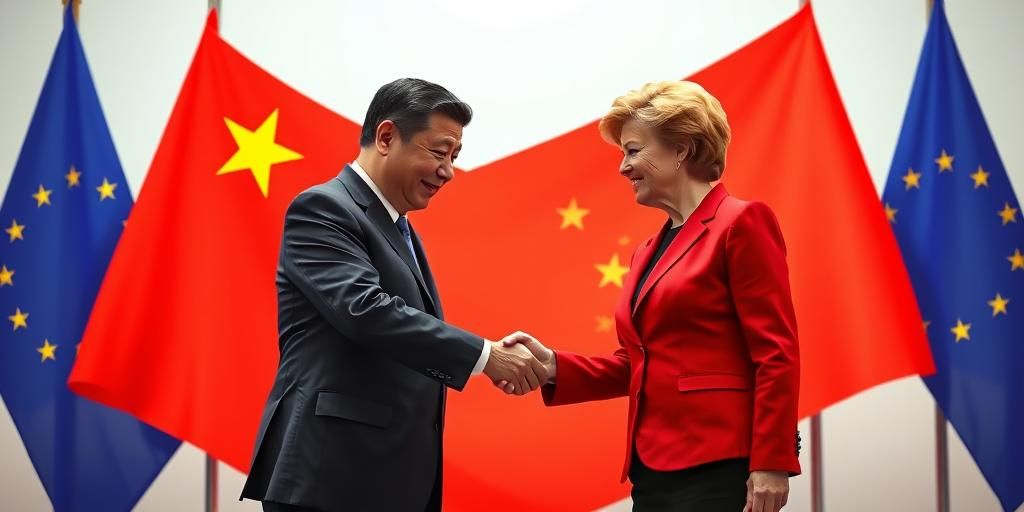
    China has officially confirmed the upcoming visit of European Union leaders scheduled for this Thursday, marking a significant moment in Beijing-Brussels relations. This summit aims to reaffirm and advance the strategic partnership between China and the EU amid a complex global geopolitical landscape.

    China-EU Summit: Strengthening Diplomatic Ties

    The announcement comes as both sides seek to deepen cooperation on trade, climate change, and global governance. Over recent years, tensions surrounding issues such as market access, technology transfer, and human rights have tested the relationship, but both parties appear eager to engage in constructive dialogue.

    European Union officials are expected to explore ways to balance economic engagement with China while addressing concerns related to transparency and fair competition. For China, this summit represents an opportunity to showcase its commitment to multilateralism and to reaffirm its role as a key player on the global stage.

    The significance of the visit is heightened by the broader international context—rising rivalries between major powers, supply chain disruptions, and pressing global challenges like climate change. The summit is anticipated to cover collaborative initiatives including green energy development, investment frameworks, and coordinated actions in international institutions.

    In the past, summits between China and the EU have been pivotal for setting agendas on trade agreements and resolving outstanding disputes. This upcoming meeting carries the potential to refresh mutual commitments and encourage a balanced, pragmatic approach to cooperation.

    As the world closely watches, this engagement underscores the importance of continuous dialogue between East and West. The outcomes of these discussions may shape the trajectory of global economic relations and diplomatic alliances in years to come.