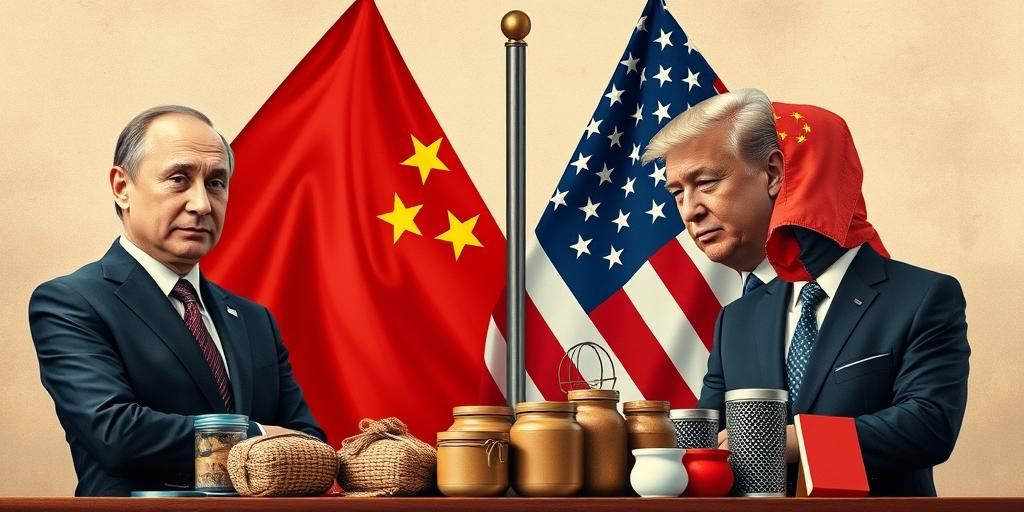
China has sharply criticized the United States, accusing Washington of double standards regarding trade relations with Russia and China. The Chinese government questions why the US maintains sanctions on Beijing’s economic activities while continuing trade ties with Russia amid the Ukraine conflict.
Chinese officials emphasize their frustration over what they see as Washington’s inconsistent approach. While the US has imposed sweeping restrictions on Chinese companies citing national security concerns, it has simultaneously allowed considerable trade with Russia, despite Western efforts to isolate Moscow over its invasion of Ukraine.
This dispute highlights the growing tensions in US-China relations, which have been fraught with disputes over technology, human rights, and geopolitical influence for several years. China’s position reflects its broader opposition to what it considers unfair and politicized economic measures by the West.
The US has justified its sanctions against Chinese firms by alleging involvement in activities contrary to US interests, often linked to military or surveillance technologies. Conversely, the US maintains sanctions and export controls targeting Russia’s economy but still permits certain trade activities, especially in energy and raw materials.
China’s criticism comes at a time of complex global alignments, where Beijing continues to deepen ties with Moscow, partly to counterbalance US influence. The US and its allies remain cautious about any coordination between China and Russia that could challenge Western-led economic and diplomatic norms.
Trade, Sanctions, and Geopolitical Tensions
This latest exchange underscores the challenges in maintaining a unified international stance on trade and sanctions amidst shifting alliances. The US approach to China focuses heavily on restricting technology transfers and pressuring Beijing over human rights issues and perceived unfair trade practices. Meanwhile, Moscow’s conflict with Ukraine complicates efforts to enforce cohesive economic responses.
As China questions the rationale behind the US’s disparate treatment, observers note that such disputes could further strain global economic relations. Washington’s balancing act between punishing Moscow and confronting Beijing signals an increasing complexity in global diplomacy, with ramifications for international trade systems and geopolitical stability.
What this means for international cooperation on trade sanctions and economic diplomacy remains uncertain as these major powers navigate an increasingly fractious global landscape.